
Selecting a fruit powder for an industrial formulation involves more than comparing ingredient names or reading a single nutrient value. Product developers must consider how the ingredient behaves during mixing, processing, storage and final consumption.
Acerola berry powder offers an interesting combination of Brazilian fruit identity, naturally occurring vitamin C, characteristic acidity and formulation versatility. It can be incorporated into beverage systems, dietary supplements, powdered blends, functional foods and selected bakery applications.
However, not every acerola powder has the same composition or performance. Fruit maturity, raw-material selection, processing conditions, carrier composition, moisture protection and storage all influence the finished ingredient.
This guide explains how industrial buyers can evaluate acerola berry powder from a practical product-development perspective.
Acerola is the fruit of Malpighia emarginata DC., a species belonging to the Malpighiaceae family. It is also commonly called acerola cherry, Barbados cherry or West Indian cherry.
Although the fruit resembles a cherry, acerola belongs to a different botanical family. Its commercial importance is associated primarily with its naturally high concentration of ascorbic acid, together with carotenoids, phenolic compounds and fruit acids.
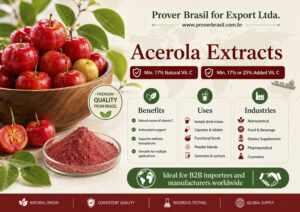
Acerola berry powder is produced by transforming processed acerola fruit material into a dry, manageable ingredient. Depending on the production method and commercial specification, the powder may contain fruit pulp solids, concentrated fruit components and a suitable carrier system.
The precise composition should always be confirmed through the product specification and Certificate of Analysis rather than inferred from the commercial name alone.
Fresh acerola is highly perishable. Its delicate structure, elevated moisture content and sensitive compounds make rapid processing important after harvesting.
Vitamin C is especially susceptible to degradation caused by oxygen, moisture, light, temperature and prolonged storage. Converting the fruit into powder improves logistical practicality, but drying does not make the ingredient completely resistant to environmental conditions.
Research on spray-dried acerola demonstrates that processing variables and storage conditions can materially affect vitamin C retention. Packaging and storage are therefore part of ingredient quality, not merely shipping details.
For purchasing and formulation teams, this means that the initial ascorbic acid result is only one part of the evaluation. The expected value at the end of the product’s shelf life may be equally important.
Acerola is frequently discussed only as a source of vitamin C. That description is accurate but incomplete.
Scientific analyses have identified several groups of compounds within the fruit matrix, including:
The amounts of these compounds vary according to cultivar, maturity stage, growing conditions and processing method. Unripe fruit generally contains more vitamin C, while the phenolic and pigment profile changes as the fruit matures.
Consequently, two acerola powders can differ in color, flavor, acidity and nutrient concentration even when both originate from the same botanical species.
Vitamin C contributes to normal immune function, collagen formation and the protection of cells from oxidative stress. The exact statements permitted on a finished product depend on its composition, serving size and destination-market regulations.
Research also describes antioxidant and anti-inflammatory potential associated with acerola compounds. Much of this evidence, however, comes from laboratory, animal or compositional studies. It should not be converted automatically into disease-prevention or treatment claims.
Responsible communication separates the nutritional characteristics of the ingredient from medical promises that have not been established by clinical evidence.
Acerola powder can serve different functions depending on the formulation, dosage and selected grade.
The fruit’s tart profile can complement citrus, berry and tropical flavors in hydration powders, wellness drink mixes and instant beverage systems.
Product developers should evaluate dispersibility, sedimentation, color development and flavor balance in the complete formula. A powder that performs well in water may behave differently in systems containing proteins, minerals, gums or sweeteners.
Acerola berry powder can be incorporated into capsules, tablets, sachets and multi-ingredient supplement blends.
For these applications, buyers may need to assess:
The amount of powder required in each serving depends on the tested nutrient value rather than a generic database figure for fresh acerola.
Acerola can add fruit-derived positioning and tart flavor to powdered nutrition products, smoothie blends, fruit preparations, snack systems and other functional-food concepts.
Its acidity may help shape the sensory profile of a formulation, but it can also interact with proteins, minerals and flavors. Bench trials are advisable before commercial scale-up.
Research published in Foods evaluated acerola powder as an alternative source of ascorbic acid in breadmaking. In the tested conditions, the powder affected dough strength and tenacity in a manner comparable to conventional ascorbic acid.
This application is technically interesting because it presents acerola as a functional formulation component rather than simply a fruit flavor. Results will nevertheless depend on flour characteristics, dose and processing conditions.
Because vitamin C participates in normal collagen formation, acerola is often considered for ingestible beauty and wellness formulations.
Any label or marketing statement must be supported by the nutrient content of the finished product and comply with the rules of the country where it will be sold.
The performance of acerola powder depends on the complete formulation environment.
Acerola has a naturally tart profile. At low inclusion rates, it may add brightness to a blend. At higher levels, it can become a dominant sensory element requiring adjustment with sweeteners or complementary flavors.
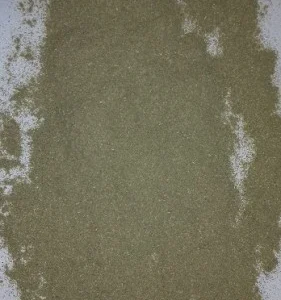
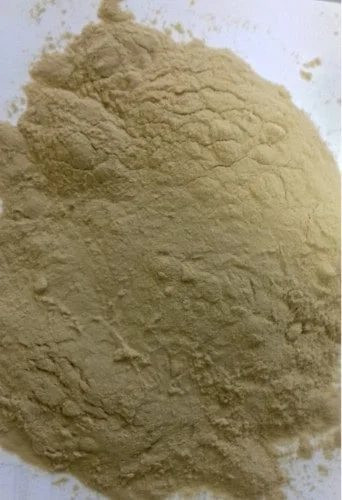
The appearance of acerola powder can range according to raw material and processing. Color alone should not be treated as proof of vitamin C content or overall quality.
If the visual identity of the finished product is important, color parameters should be included in sample evaluation and purchasing specifications.
Fruit powders may absorb water from the surrounding environment. Moisture uptake can contribute to clumping, reduced flow and degradation of sensitive compounds.
Once opened, the ingredient should be protected from humidity and excessive air exposure. Appropriate barrier packaging and controlled storage help preserve its physical and nutritional characteristics.
Drying aids can improve powder formation, stability and handling. They also influence fruit-solids concentration, flavor intensity and serving calculations.
Buyers should therefore request a complete ingredient composition and avoid assuming that all powders marketed under the same name have equivalent fruit content.
A commercial specification should reflect the intended application. There is little value in requesting parameters that will not affect the finished product, while overlooking properties that could interrupt production.
Depending on the destination market and application, the technical review may include:
Before selecting a commercial lot, purchasers should clarify:
These questions create a clearer comparison than price per kilogram alone.
Acerola powder should not be evaluated only when the raw material arrives. Its behavior during the entire life of the finished product also matters.
Vitamin C degradation can continue after acerola is incorporated into a formula. Exposure to heat, oxygen, water activity, light and certain minerals may accelerate this process.
A sound development program may therefore include:
An additional quantity of an ingredient should never be added solely on assumption. Any overage must be technically justified, validated and permitted by the applicable regulations.
The powder should be kept in its original sealed packaging in a cool, dry environment, protected from direct light, moisture, heat and strong odors.
After opening, production personnel should minimize exposure time and reseal the package correctly. Scoops and handling equipment must be clean and dry.
The supplier’s storage instructions and shelf-life declaration should always take precedence because they relate to the specific composition and packaging system supplied.
Brazil has developed significant experience in cultivating and processing acerola. For international buyers, Brazilian origin can support a recognizable tropical-fruit story while providing access to an ingredient used across several product categories.
Origin alone, however, does not replace technical qualification. Buyers should combine origin information with lot documentation, application tests and a specification suited to the intended formulation.
Prover Brasil for Export Ltda. supplies Brazilian botanical and fruit ingredients to international buyers. Commercial availability, composition and documentation should be confirmed when requesting a quotation.
No. Acerola powder is a fruit-derived ingredient containing ascorbic acid and other fruit components. Pure ascorbic acid is an isolated compound with a different concentration, composition and formulation behavior.
No. Vitamin C content can vary with cultivar, maturity, processing method, carrier composition and storage. Use the specification and lot-specific Certificate of Analysis for formulation calculations.
Yes. It can be evaluated for powdered drinks, fruit blends and other beverage systems. Solubility, dispersibility, sedimentation, acidity and flavor should be tested in the complete formula.
Published research has examined acerola powder as a bread improver and found effects on dough properties under the tested experimental conditions. Commercial use requires validation with the specific powder, flour and production process.
Vitamin C and other fruit compounds can be affected by moisture, oxygen, light and heat. Suitable barrier packaging and correct storage help protect the ingredient during its shelf life.
Importers should request the product specification, ingredient composition, Certificate of Analysis, microbiological parameters, storage instructions, shelf life and other documents required by the destination market.
Are you developing a beverage, supplement, nutrition blend or food product with Brazilian acerola?
Contact Prover Brasil for Export Ltda. to discuss the required quantity, destination country, intended application and technical parameters. Our team can provide current commercial information and available product documentation.
Website: www.proverbrasil.com.br
Product information: Acerola Extracts and Powders
Contact: Request commercial information
| Brazilian acerola extracts and powders | https://proverbrasil.com.br/produto/acerola-extracts-powders/ |
| Brazilian fruit powders and botanical ingredients | https://proverbrasil.com.br/products/ |
| Request acerola berry powder information | https://proverbrasil.com.br/contact/ |
| Brazilian botanical ingredient exporter | https://proverbrasil.com.br/about-us/ |
| Fruit powders for industrial applications | https://proverbrasil.com.br/products/ |
Prakash, A.; Baskaran, R. Acerola, an Untapped Functional Superfruit: A Review on Latest Frontiers. Journal of Food Science and Technology, 2018. Read the full-text article on PubMed Central.
Garcia, V. A. S.; Borges, J. G.; Vanin, F. M.; Carvalho, R. A. Vitamin C Stability in Acerola and Camu-Camu Powder Obtained by Spray Drying. Brazilian Journal of Food Technology, 2020. Read the full-text article on SciELO.
Franco, M.; Belorio, M.; Gómez, M. Assessing Acerola Powder as a Substitute for Ascorbic Acid as a Bread Improver. Foods, 2022, 11(9), 1366. Read the full-text article | DOI: 10.3390/foods11091366.
Uchida, E. et al. Absorption and Excretion of Ascorbic Acid Alone and in Acerola (Malpighia emarginata) Juice: Comparison in Healthy Japanese Subjects. Journal of Nutritional Science and Vitaminology, 2011. View the article record on PubMed.
Olędzki, R.; Harasym, J. Acerola (Malpighia emarginata) Anti-Inflammatory Activity—A Review. International Journal of Molecular Sciences, 2024, 25(4), 2089. Read the full-text article on PubMed Central | View the PubMed record.