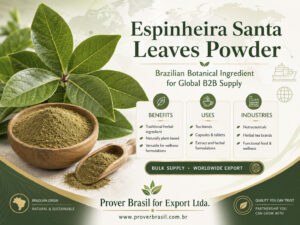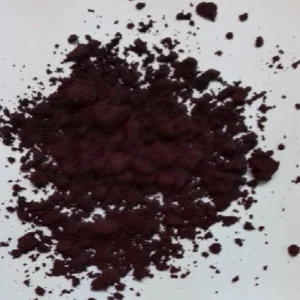

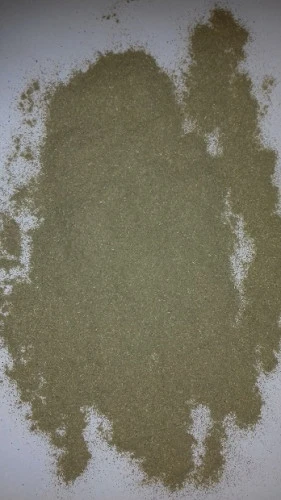
Espinheira Santa Leaves Powder and Extract are Brazilian botanical ingredients produced from the leaves of Espinheira Santa, a South American plant with a long history of traditional herbal use.
Prover Brasil for Export Ltda. supplies two Espinheira Santa ingredient formats for international B2B requirements:
Each product offers different characteristics for importers, distributors, formulators and companies developing botanical products.
Common Name: Espinheira Santa
Alternative Common Name: Congorosa
Botanical Name: Maytenus ilicifolia Mart. ex Reissek
Alternative Botanical Name: Monteverdia ilicifolia (Mart. ex Reissek) Biral
Family: Celastraceae
Plant Part: Leaves
Origin: Brazil
International buyers may encounter both botanical names in technical, scientific and regulatory literature. Kew Science – Plants of the World Online provides botanical nomenclature and distribution information for this species.
Espinheira Santa Leaves Powder and Espinheira Santa Extract originate from the same botanical source, but they are different ingredient formats.
The appropriate choice depends on the intended formulation, manufacturing process, required concentration profile, dosage form and regulations of the destination market.
This distinction is important for professional purchasing because a whole-leaf powder should not be considered equivalent to a botanical extract.
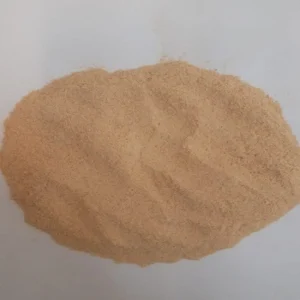
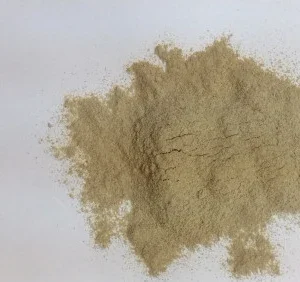
Espinheira Santa Leaves Powder is produced from processed and milled Espinheira Santa leaves.
The powder retains a broader whole-leaf botanical matrix because it is not produced through a concentration process comparable to an extract.
This format can be evaluated for applications such as:
All applications remain subject to the regulations of the country where the finished product will be manufactured or marketed.
Espinheira Santa Leaves Powder offers a practical ingredient format when manufacturers prefer milled botanical leaf material.
Its potential advantages for product development include:
Particle size can be particularly important for industrial buyers because it may influence blending, capsule filling, flow behavior and processing performance.
Buyers should therefore confirm the exact specification before ordering.
Professional buyers may wish to evaluate parameters such as:
The exact characteristics should always be confirmed through the current technical specification and applicable Certificate of Analysis.
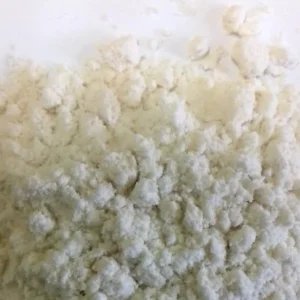
Espinheira Santa Extract is produced from Espinheira Santa leaves through an extraction process designed to obtain selected soluble fractions from the botanical material.
The resulting ingredient differs from regular leaf powder in both processing method and concentration profile.
Extracts may be preferred by manufacturers who require a processed botanical ingredient with different inclusion characteristics from whole-leaf powder.
Potential applications can include:
The exact suitability depends on the specification of the extract and the regulatory requirements of the destination market.
An extract can provide formulators with additional flexibility when a more concentrated botanical ingredient is desired.
Potential formulation advantages include:
However, not all Espinheira Santa extracts are equivalent.
Extraction method, ratio, solvents, carrier ingredients and analytical characteristics can influence the final ingredient.
Before purchasing Espinheira Santa Extract, international buyers should confirm applicable information such as:
The specification for Espinheira Santa Extract should be reviewed independently from the specification for Espinheira Santa Leaves Powder.
The two formats provide different options for product developers.
Espinheira Santa Leaves Powder is appropriate when a formulation requires milled botanical leaf material.
Espinheira Santa Extract may be considered when the manufacturer requires an extracted botanical ingredient with different concentration and formulation characteristics.
Neither format is universally better.
The correct choice depends on:
Professional buyers should therefore compare the specifications rather than selecting an ingredient based only on its commercial name.
Espinheira Santa belongs to the Celastraceae botanical family and occurs naturally in parts of South America.
The leaves have historically been the principal plant material associated with traditional Espinheira Santa preparations.
Botanical databases and Brazilian regulatory literature may use the names Maytenus ilicifolia and Monteverdia ilicifolia.
For additional botanical information, visit Kew Science – Plants of the World Online.
Companies interested in other Brazilian plant ingredients can also explore our Brazilian Herbs Raw Material and our complete Brazilian Botanical Ingredients selection.
Scientific literature has investigated several groups of naturally occurring compounds present in Espinheira Santa leaves.
Reported botanical constituents include classes such as:
The qualitative and quantitative composition of botanical ingredients may vary according to growing conditions, plant material, harvest, drying, processing and extraction method.
For this reason, product developers should evaluate the actual commercial specification of the ingredient they intend to purchase.
General scientific literature about the plant should not replace lot-specific analytical documentation.
Espinheira Santa has a long history of traditional use in Brazil, especially in herbal preparations associated with digestive comfort.
This traditional background has encouraged further scientific investigation of the plant and of specific standardized Espinheira Santa preparations.
Traditional use, however, should not be interpreted as proof that every commercial Espinheira Santa powder or extract prevents, treats or cures a disease.
Any health-related claim for a finished product depends on:
For Brazilian regulatory information, consult the Brazilian Health Regulatory Agency – ANVISA.
Researchers have investigated Espinheira Santa preparations for their botanical and pharmacological properties.
A randomized double-blind clinical study published in 2024 evaluated a standardized dry Espinheira Santa leaf extract in participants with symptoms associated with gastroesophageal reflux disease.
The study is useful for understanding scientific interest in the botanical.
However, its results concern the specific standardized extract, dosage and study conditions used by the researchers.
They should not be applied automatically to every Espinheira Santa Leaves Powder or every commercially available Espinheira Santa Extract.
Botanical research often uses materials manufactured to specific experimental standards.
Two commercial products carrying the same botanical name can differ significantly.
Important differences can include:
For this reason, professional buyers should not assume that research involving one specialized extract demonstrates identical effects for a different powder or extract.
This distinction supports more responsible product development and scientifically accurate botanical marketing.
For B2B buyers, the most relevant benefits of Espinheira Santa ingredients concern product format, formulation flexibility and ingredient selection.
Espinheira Santa Leaves Powder provides processed whole-leaf botanical material for manufacturers who prefer a powder format.
It can be incorporated into dry botanical systems where permitted.
Espinheira Santa Extract provides a different processing and concentration format for manufacturers whose formulations call for extracted botanical material.
Offering powder and extract allows procurement and R&D teams to compare two formats from the same botanical source.
This can support development of different finished-product concepts.
B2B purchasing allows manufacturers to evaluate ingredient specifications before selecting a commercial grade.
Technical requirements can then be matched more closely to the intended application.
Depending on destination-market regulations, Espinheira Santa ingredients may be evaluated for several product-development categories.
Espinheira Santa Leaves Powder and selected extracts may be evaluated for capsule formulations.
Manufacturers should determine appropriate particle size, flow characteristics, dosage and compatibility during development.
Selected powder or extract formats can be evaluated for tablet development.
Compression behavior, excipients, stability and finished-product specifications should be assessed by the manufacturer.
Espinheira Santa Leaves Powder may be considered for multi-botanical powder combinations.
Particle-size compatibility and blending uniformity are important when developing these formulations.
Espinheira Santa Extract may be combined with other compatible botanical ingredients when permitted by local regulations.
The formulation should be evaluated according to its intended use and technical requirements.
Companies developing traditional botanical products may evaluate Espinheira Santa according to applicable local legislation and relevant botanical traditions.
Both Espinheira Santa Leaves Powder and Espinheira Santa Extract can be evaluated during formulation trials, laboratory research and new-product development.
Professional botanical ingredient procurement should be based on more than a product name.
Buyers should define their technical requirements before confirming an order.
Relevant criteria may include:
A Certificate of Analysis provides analytical information for a specific lot and allows buyers to compare results with the agreed commercial specification.
Importers should request documentation for the exact ingredient under evaluation.
Documentation for Espinheira Santa Leaves Powder should not automatically be considered applicable to Espinheira Santa Extract, because the two products have different processing characteristics.
Likewise, different extract grades may require different specifications.
Technical documentation should therefore be reviewed before final product approval.
Botanical ingredients require appropriate safety and regulatory evaluation.
Natural origin does not mean that every ingredient or dosage is appropriate for every consumer or finished-product category.
Scientific researchers continue to study Espinheira Santa preparations, including their pharmacological characteristics and safety.
One investigation published in 2024 evaluated pharmacological and safety-related aspects of Maytenus ilicifolia and discussed potential interactions that warrant further study.
Read the scientific study on PubMed.
Manufacturers of finished products should establish appropriate:
These decisions should be based on the specific formulation and destination-market requirements.
The information on this page is intended for professional botanical ingredient evaluation and does not constitute medical advice. Espinheira Santa raw materials are not presented here as products intended to diagnose, prevent, treat or cure disease.
Botanical ingredient regulations differ between countries and product categories.
A botanical permitted for one use in one country may be subject to different requirements elsewhere.
Importers, distributors and finished-product companies should verify:
For Brazilian regulatory information, visit the Brazilian Health Regulatory Agency – ANVISA.
Companies looking for Espinheira Santa Leaves Powder from Brazil can request current commercial and technical information from Prover Brasil for Export Ltda.
When requesting a quotation, buyers should specify:
This information helps determine the most suitable quotation and logistics requirements.
International buyers looking for Espinheira Santa Extract from Brazil should provide the desired technical requirements whenever possible.
Because botanical extracts may differ in concentration and processing characteristics, specifying requirements early in the purchasing process can help identify the appropriate commercial grade.
Buyers should request the current specification before confirming suitability for a formulation.
Prover Brasil for Export Ltda. supplies Brazilian botanical ingredients for international commercial requirements.
Our Espinheira Santa range provides buyers with two ingredient options:
Espinheira Santa Leaves Powder for formulations requiring milled botanical leaf material.
Espinheira Santa Extract for formulations requiring an extracted botanical ingredient.
Explore our complete Brazilian Botanical Ingredients, learn more About Prover Brasil for Export Ltda., or Contact Us for commercial information.
For a more accurate quotation, please provide:
Our commercial team can then evaluate your requirements for Espinheira Santa Leaves Powder or Espinheira Santa Extract.
Prover Brasil for Export Ltda. offers two botanical ingredient formats on this page:
Each product has different processing and formulation characteristics.
Espinheira Santa Leaves Powder consists primarily of processed and milled botanical leaf material.
Espinheira Santa Extract is produced through an extraction process designed to obtain selected fractions from the leaves.
Their specifications, concentration profiles and potential inclusion levels therefore differ.
The plant is widely known in botanical literature as Maytenus ilicifolia Mart. ex Reissek.
The name Monteverdia ilicifolia (Mart. ex Reissek) Biral is also used in updated botanical and Brazilian regulatory references.
See the Kew Science botanical record for additional nomenclature information.
The leaves are used as the botanical source for the Espinheira Santa products described on this page.
No.
The powder is based on milled leaf material, while the extract undergoes an extraction process.
Professional buyers should evaluate their specifications separately.
The choice depends on the formulation.
Leaves Powder may be appropriate when whole-leaf botanical material is preferred.
Extract may be appropriate when an extracted botanical ingredient is required.
Buyers should compare specifications before making a purchasing decision.
No.
Scientific studies evaluate specific preparations under defined conditions.
Their findings cannot automatically be transferred to every commercial Espinheira Santa powder or extract.
Professional buyers should request current technical specifications and applicable analytical documentation for the exact product or grade under consideration.
International commercial buyers can contact Prover Brasil for Export Ltda. with the required product, quantity, destination and technical requirements.
Contact Prover Brasil for Export Ltda.
Royal Botanic Gardens, Kew – Plants of the World Online
Botanical nomenclature, taxonomy and geographic information for Maytenus ilicifolia.
View the botanical record
Brazilian Health Regulatory Agency – ANVISA
Official Brazilian regulatory information concerning botanical and herbal products.
Visit ANVISA
da Silva, M. S. et al. – 2024
Clinical research evaluating a standardized dry Espinheira Santa leaf extract in participants with gastroesophageal reflux-related symptoms.
View the study on PubMed
Danilevicz, C. K. et al. – 2024
Pharmacological and safety-related investigation of Maytenus ilicifolia.
View the study on PubMed
Discover additional botanical raw materials available from Prover Brasil for Export Ltda.:
Brazilian Botanical Ingredients
About Prover Brasil for Export Ltda.
Contact Prover Brasil for Export Ltda.