Wholesale Bulk Supplier Espinheira Santa Leaves Powder
Explore Brazilian Espinheira Santa leaves powder through practical pilot trials, three experimental blend recipes and a purchasing checklist for international botanical ingredient buyers.


Best Pau D’Arco Bark Extract Powder Wholesale Supplier from Brazil – Bulk Export and B2B Sourcing is a topic of interest to international importers searching for Brazilian botanical ingredients with clear technical specifications, reliable commercial communication, and structured export procedures.
Pau D’Arco Bark Extract Powder, also known in international botanical trade as Taheebo or Lapacho extract, is derived from bark associated with South American tree species.
For industrial buyers, the value of this ingredient extends beyond its botanical heritage. Accurate identification, ingredient consistency, traceable documentation, formulation compatibility, and shipment planning are essential considerations when evaluating international purchases.
Prover Brasil for Export Ltda. supports B2B inquiries from importers, ingredient distributors, botanical brands, and product-development companies interested in sourcing Brazilian botanical materials.
Pau D’Arco belongs to a group of botanicals associated with trees in the Bignoniaceae family.
International buyers may encounter the names Pau D’Arco, Taheebo, Lapacho, Ipê Roxo, Tabebuia impetiginosa, and Tabebuia avellanedae.
For the botanical species historically described as Tabebuia avellanedae, the currently accepted name is Handroanthus impetiginosus, according to Kew Science.
Commercial names alone cannot guarantee botanical identity. For this reason, importers should confirm the species, plant part, processing method, and product specification associated with each proposed shipment.
The principal botanical ingredient formats include bark extract powder, regular bark powder, and cut bark.
Each format has distinct processing characteristics and should be evaluated according to its intended industrial application.
For product-specific information, visit Pau D’Arco Bark Products – Prover Brasil.
International ingredient procurement requires coordination between the buyer’s technical, purchasing, quality, and logistics teams.
Before confirming an order, the buyer should establish a purchasing specification that reflects the ingredient’s intended application and import-market requirements.
A commercial quotation is more useful when both parties understand the required ingredient.
The initial specification should clarify:
Comparing prices without first comparing specifications can lead to misleading conclusions about commercial value.
Traceability is particularly important for botanical ingredient distribution.
Importers should discuss the availability of appropriate technical documents, which may include a Certificate of Analysis, batch identification, physical specifications, and relevant laboratory reports.
Documentation requirements vary by application and destination market.
A clear agreement on documentation before shipment can help reduce misunderstandings during receiving inspection.
Packaging should be suitable for the ingredient, shipment conditions, and planned storage environment.
Potential considerations include moisture protection, container integrity, labeling accuracy, batch identification, and compatibility with the buyer’s warehouse procedures.
Commercial buyers should also clarify whether the requested packaging is suitable for further industrial use or distribution.
International export planning involves more than choosing between air and sea transportation.
The purchasing team should clarify the destination, requested quantity, shipping responsibilities, required documents, and applicable commercial terms.
For smaller trial orders, buyers may evaluate a different transportation arrangement from that used for recurring wholesale shipments.
Upon arrival, the importer should compare the shipment against the agreed specification and available documentation.
A structured receiving process can include packaging inspection, batch verification, visual assessment, and any agreed laboratory checks.
Clear communication between the buyer and Prover Brasil can help address technical questions before the material enters production.
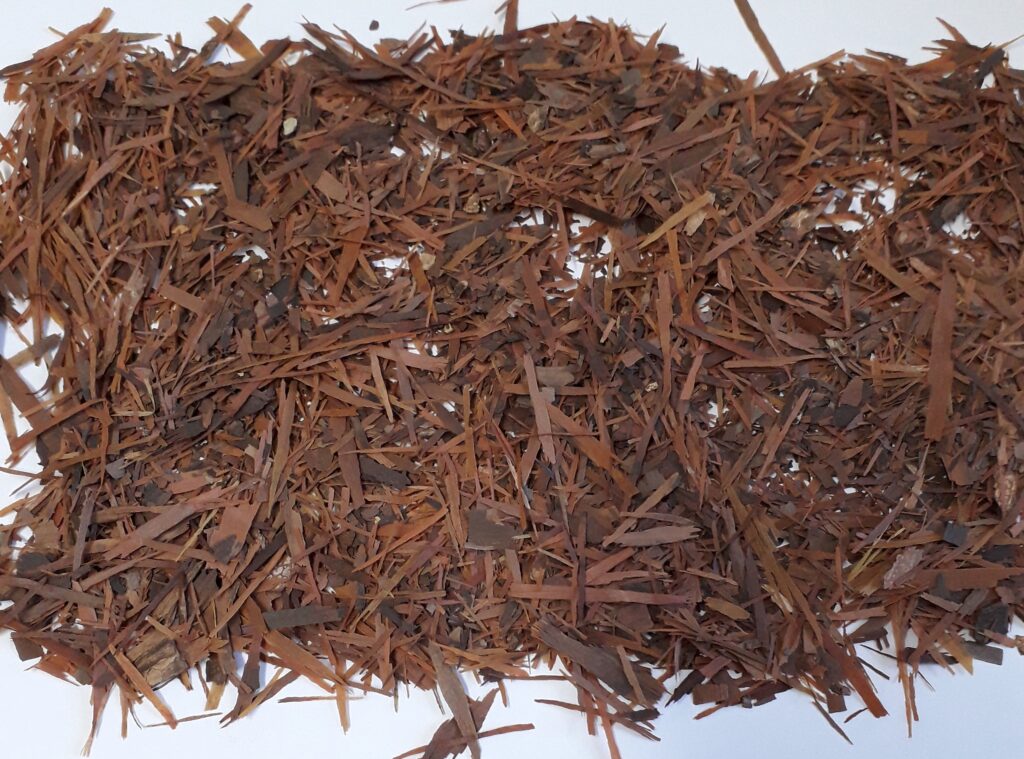
Picture: Cut Pau D´arco Bark
Brazilian Pau D’Arco Bark Extract Powder can be considered for selected botanical product-development activities, subject to the suitability and permitted status of the exact ingredient.
Powdered botanical ingredients can be evaluated for use in multi-component dry blends.
Technical teams should examine particle size, flowability, mixing uniformity, color compatibility, and moisture behavior.
The objective is to determine whether the extract can be handled consistently under the proposed processing conditions.
Companies researching botanical capsule or tablet concepts may assess Pau D’Arco extracts as potential ingredients where permitted.
Appropriate evaluation includes ingredient identity, analytical specifications, powder behavior, stability, safety, and regulatory review.
A botanical’s traditional use or laboratory research does not independently demonstrate clinical effectiveness.
R&D teams may investigate the dispersion, color, aroma, and sedimentation characteristics of Pau D’Arco Bark Extract Powder in non-consumable laboratory samples.
Different extraction methods can influence behavior in liquid systems.
Complete water solubility should never be assumed solely because an ingredient is supplied as an extract powder.
Importers and wholesalers may offer differentiated botanical formats to business customers with varying technical requirements.
Clear distinctions between concentrated extract, milled bark, and cut bark are important for accurate product descriptions.
Research laboratories may evaluate Pau D’Arco materials through analytical methods designed to investigate botanical constituents and batch characteristics.
These applications emphasize documentation, method suitability, and sample traceability rather than unverified health claims.
The following recipes are laboratory-scale evaluation concepts. They are designed for technical observation, physical compatibility testing, and analytical development.
These prototypes are not finished products, consumer recipes, or recommended serving formulas. Do not ingest or sell the mixtures without appropriate safety, toxicological, formulation, and regulatory evaluation.
Objective: Evaluate the dispersion, sedimentation, and visual behavior of Pau D’Arco Bark Extract Powder in an aqueous laboratory system.
Ingredients:
Total: 100.00 g.
Procedure:
Technical value: The test helps formulation teams identify whether additional dispersion work is necessary.
The proposed concentration is an experimental screening condition, not a safe or effective oral dose.
Objective: Evaluate preliminary blending and powder-handling characteristics using an illustrative carrier system.
Ingredients:
Total: 100.00 g.
Procedure:
Technical value: This prototype can support early investigation of dry-powder distribution and mixing behavior.
The composition is illustrative only and does not establish suitability for food, supplement, or other consumer applications.
Objective: Compare the physical stability of a botanical powder sample under controlled packaging conditions.
Ingredients:
Total: 100.00 g.
Procedure:
Technical value: This prototype helps technical teams investigate packaging performance and potential moisture sensitivity.
The carrier must be selected according to the laboratory method and should not introduce interfering or reactive constituents.
These three concepts complement purchasing decisions but do not replace validated stability studies, safety testing, or commercial-product development.
Scientific publications provide useful background for understanding the composition and analytical evaluation of Pau D’Arco materials.
However, the scientific literature also demonstrates why it is important to distinguish isolated compounds, laboratory extracts, and finished commercial ingredients.
Research has identified several classes of constituents in botanical material associated with Tabebuia impetiginosa, including naphthoquinones, phenolic compounds, and glycosides.
A publication entitled Further Constituents from the Bark of Tabebuia impetiginosa examines chemically characterized compounds isolated from bark material.
Read the study in Phytochemistry via PubMed.
A study published in the Journal of AOAC International describes the development and validation of an analytical method applicable to evaluating certain Taheebo extracts.
This research illustrates how analytical methods can support consistent ingredient characterization when properly validated for the material under examination.
Read: Development and Validation of an Analytical Method for Taheebo Extract.
A paper entitled Bioactive Properties of Tabebuia impetiginosa-Based Phytopreparations and Phytoformulations examines the chemical and experimental characteristics of different botanical preparations.
The study provides scientific context for understanding why the form of a botanical ingredient matters when interpreting laboratory findings.
Read the comparative scientific study.
Botanical nomenclature is an essential part of professional ingredient documentation.
Kew Science records Tabebuia avellanedae as a synonym of Handroanthus impetiginosus.
Consult the botanical record at Kew Science.
Research on Pau D’Arco constituents does not demonstrate that all commercial extracts are effective or safe for human consumption.
Certain preparations and constituents may present safety concerns, including possible interactions with medications affecting blood clotting.
Professional buyers should consider the intended use, ingredient composition, regulatory status, and appropriate safety evidence before commercial development.
For additional information, consult Memorial Sloan Kettering Cancer Center – Pau D’Arco.
A structured commercial inquiry helps buyers receive more relevant information.
When contacting Prover Brasil for Export Ltda., international importers should provide:
Commercial terms, availability, packaging, and shipment arrangements should be confirmed before an order is finalized.
Prover Brasil for Export Ltda. is a Brazilian export business serving international buyers interested in botanical ingredients.
The company’s commercial portfolio includes Brazilian botanical powders, extracts, and other ingredients intended for business-to-business supply.
For Pau D’Arco inquiries, buyers can discuss product formats, required quantities, applicable specifications, documentation needs, and export arrangements.
The value of a productive sourcing relationship depends on clear specifications, realistic purchasing requirements, and transparent commercial communication.
Explore the Pau D’Arco Bark Extract Powder product page for further product information.
International buyers can also visit the Prover Brasil product catalog to explore other Brazilian botanical ingredients.
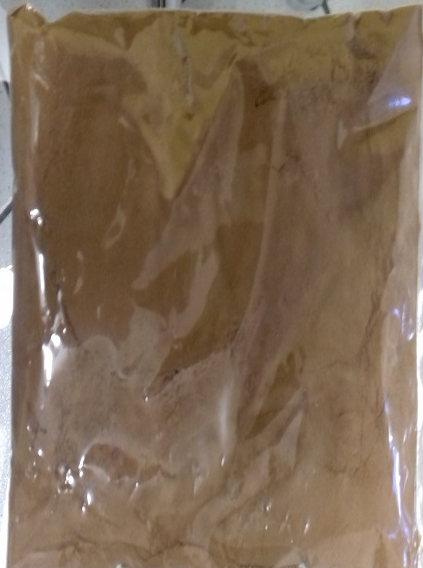
Buyers should request clear botanical identification, product specifications, commercial quantities, documentation information, packaging options, and export conditions.
Yes. Cut bark consists of botanical pieces, while extract powder is produced through extraction and drying. The materials should be evaluated separately for their intended applications.
It may be evaluated in certain technical formulations where its use is permitted. Product compatibility, ingredient safety, and regulatory requirements must be established before commercialization.
Brazil offers access to botanical ingredients associated with South American flora. Buyers can evaluate Brazilian sourcing opportunities according to technical specifications, commercial availability, and export arrangements.
Not by itself. An extraction ratio should be interpreted together with the extraction method, carrier information, and analytical specification.
Research on botanical identification, phytochemical composition, analytical methods, and safety can help buyers develop technical questions and evaluate supporting documentation.
No. The recipes in this guide are technical prototypes for controlled evaluation. They are not approved consumption instructions or finished-product formulations.
Yes. Buyers can contact Prover Brasil to discuss product availability, requested quantities, technical requirements, destination markets, and commercial conditions.
Product format, quantity, destination, packaging requirements, technical specifications, documentation needs, and commercial terms should be agreed upon before shipment.
Importers seeking Brazilian botanical ingredients can contact Prover Brasil for Export Ltda. to discuss their sourcing requirements.
Whether the purchasing project concerns botanical extract powder, regular bark powder, or cut bark, the first step is to define the required product specification and commercial quantity.
Visit our Pau D’Arco Bark Products page and request information about current availability, product formats, documentation, packaging, and export conditions.
Prover Brasil for Export Ltda.
Brazilian Botanical Ingredients for International B2B Buyers
Website: https://www.proverbrasil.com.br
Contact Prover Brasil to request technical information and a wholesale export quotation.