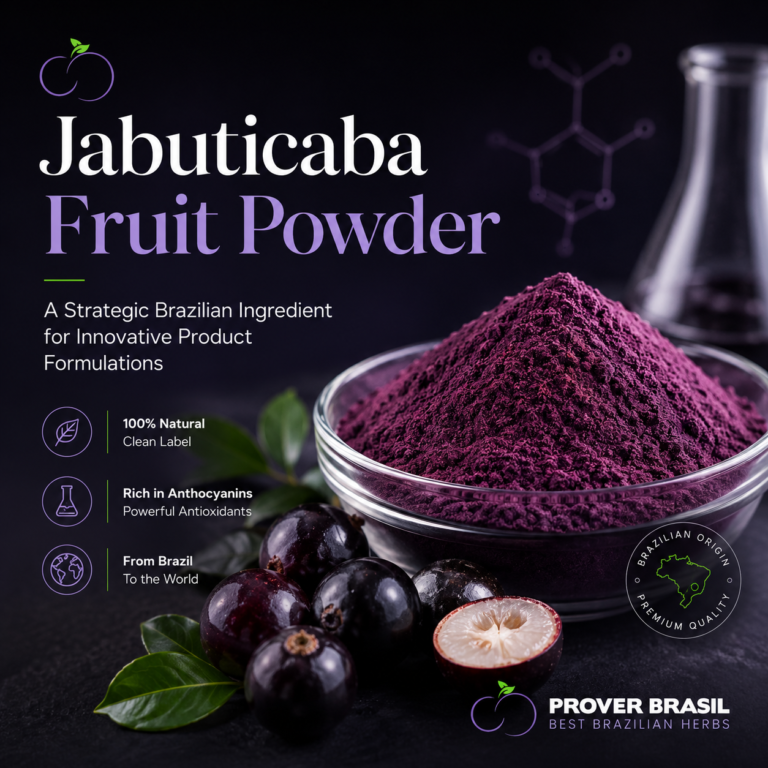
The global market for natural ingredients is evolving rapidly. Food, beverage, nutraceutical and wellness brands are increasingly searching for ingredients that combine authentic origin, distinctive sensory characteristics, formulation versatility and a compelling story for consumers.
Within this context, Jabuticaba Fruit Powder is gaining attention as a differentiated Brazilian ingredient. Made from jabuticaba, a dark-purple fruit native to Brazil, the powder offers manufacturers an opportunity to introduce an exotic fruit profile into functional foods, beverages, powdered blends, supplements and other value-added products.
Unlike widely commercialized berries, jabuticaba still provides considerable room for product differentiation. Its Brazilian identity, intense natural coloration and association with native biodiversity make it particularly relevant for companies seeking alternatives to conventional berry ingredients.
As an experienced Brazilian superfood and botanical ingredient export company, Prover Brasil for Export Ltda. supports international buyers looking for Brazilian raw materials for commercial and industrial applications. The company has operated from Belo Horizonte, Brazil, since 2001, serving the international B2B market with wholesale ingredients, export coordination and worldwide distribution.
What Is Jabuticaba Fruit Powder?
Jabuticaba Fruit Powder is a dehydrated ingredient obtained from jabuticaba fruit, which may be processed from the whole fruit, pulp, peel or a specific combination of fruit fractions, depending on the intended specification and production method.
The fresh jabuticaba has a dark purple to nearly black peel, a light-colored pulp and a characteristic sweet-tart flavor. Because the fresh fruit is delicate and highly perishable, converting it into powder can facilitate storage, transportation, international commercialization and incorporation into industrial formulations.
The precise characteristics of the final ingredient depend on several factors, including:
- The botanical species or variety used;
- The proportion of pulp, peel and seeds;
- The drying technology;
- The use of carrier agents;
- Particle size;
- Moisture level;
- Solubility or dispersibility;
- Packaging and storage conditions.
These variables can influence color, taste, aroma, nutritional composition and technical behavior. For this reason, buyers should evaluate the specification of each available powder rather than assuming that all jabuticaba ingredients provide identical performance.
Scientific studies have investigated different drying methods for jabuticaba and their effects on phenolic compounds, stability and powder functionality. Research has also demonstrated that spray drying can transform the fruit into a more practical food resource, although the final composition depends heavily on processing conditions.
Jabuticaba Fruit Powder – 7 Benefits
1. Rich in Naturally Occurring Antioxidant Compounds
Jabuticaba Fruit Powder from Brazil contains naturally occurring polyphenols, including anthocyanins, flavonoids, and other phenolic compounds. These substances are especially concentrated in the fruit’s dark purple skin and contribute to its antioxidant activity observed in laboratory studies. This botanical composition makes Jabuticaba Powder an attractive ingredient for functional foods, nutritional formulations, and specialty fruit blends.
2. Natural Source of Anthocyanins and Plant Pigments
Jabuticaba (Plinia spp.) is recognized for its dark purple pigmentation, associated with naturally occurring anthocyanins. These compounds can contribute distinctive color characteristics to suitable food and beverage formulations. Manufacturers can explore Jabuticaba Fruit Powder for fruit-based beverages, powdered drinks, desserts, and specialty nutritional products. Color performance depends on processing conditions, formulation pH, and ingredient specifications.
3. Valuable Ingredient for Nutritional Formulations
Jabuticaba Fruit Powder provides naturally occurring fruit constituents, including polyphenols and, depending on processing and composition, dietary fiber and other nutrients. This makes it suitable for evaluation in fruit-based nutritional blends, powdered supplements, and specialty food formulations. Nutritional values should be confirmed through product-specific laboratory analysis.
4. Versatile Applications in Food and Beverage Manufacturing
One of the main benefits of Jabuticaba Fruit Powder is its versatility across industrial food and beverage applications. Manufacturers can evaluate it for use in smoothies, fruit drinks, powdered beverage mixes, breakfast cereals, nutrition bars, yogurt preparations, and confectionery products. Its distinctive Brazilian fruit identity offers opportunities for new product development and formulation differentiation.
5. Potential Applications in Functional Food Innovation
Jabuticaba has attracted scientific interest because of its polyphenolic composition and other naturally occurring fruit compounds. Research has explored its antioxidant properties and potential applications in food science. For manufacturers, Jabuticaba Fruit Powder offers opportunities to develop innovative fruit-based products, although laboratory findings should not be interpreted as proof of specific health benefits in humans.
6. Distinctive Brazilian Origin and International Market Appeal
Jabuticaba is a fruit strongly associated with Brazil and its botanical diversity. Its distinctive appearance, flavor characteristics, and regional heritage make Jabuticaba Fruit Powder an appealing ingredient for international brands seeking differentiated tropical fruit products. Brazilian origin can contribute to ingredient storytelling, product positioning, and diversification of fruit ingredient portfolios for global markets.
7. Wholesale Bulk Sourcing Opportunities for Global B2B Buyers
Jabuticaba Fruit Powder from Brazil offers commercial opportunities for international importers, wholesalers, food manufacturers, beverage companies, and botanical ingredient distributors. Bulk purchasing allows industrial buyers to evaluate product specifications, powder consistency, processing methods, packaging options, and export requirements. Its versatile industrial applications and distinctive Brazilian identity make it a valuable ingredient to consider for international product development and wholesale distribution.
Why Jabuticaba Fruit Powder Is Relevant to the Global Ingredient Market
Consumers are showing increasing interest in recognizable ingredients, regional biodiversity, natural colors and products connected to authentic cultural origins. Jabuticaba responds to several of these market expectations while remaining relatively uncommon outside Brazil.
For manufacturers, this creates an important commercial opportunity. Instead of competing exclusively with established ingredients such as blueberry, grape, cranberry or blackcurrant, companies can develop products around a distinctive Brazilian fruit with its own sensory profile and brand narrative.
Jabuticaba Fruit Powder can help support product positioning related to:
- Brazilian biodiversity;
- Exotic and tropical fruit formulations;
- Premium superfood concepts;
- Naturally colorful food and beverage products;
- Botanical and fruit-based product development;
- Innovative limited-edition flavors;
- International sourcing of authentic Brazilian ingredients.
The ingredient is especially attractive for companies that want to build a product story extending beyond basic flavor. Its origin can become part of packaging communication, brand positioning, educational content and marketing campaigns.
However, commercial communication should remain technically responsible. Nutritional or functional claims must always be based on the actual composition of the supplied ingredient, laboratory documentation and the regulations applicable in the destination market.
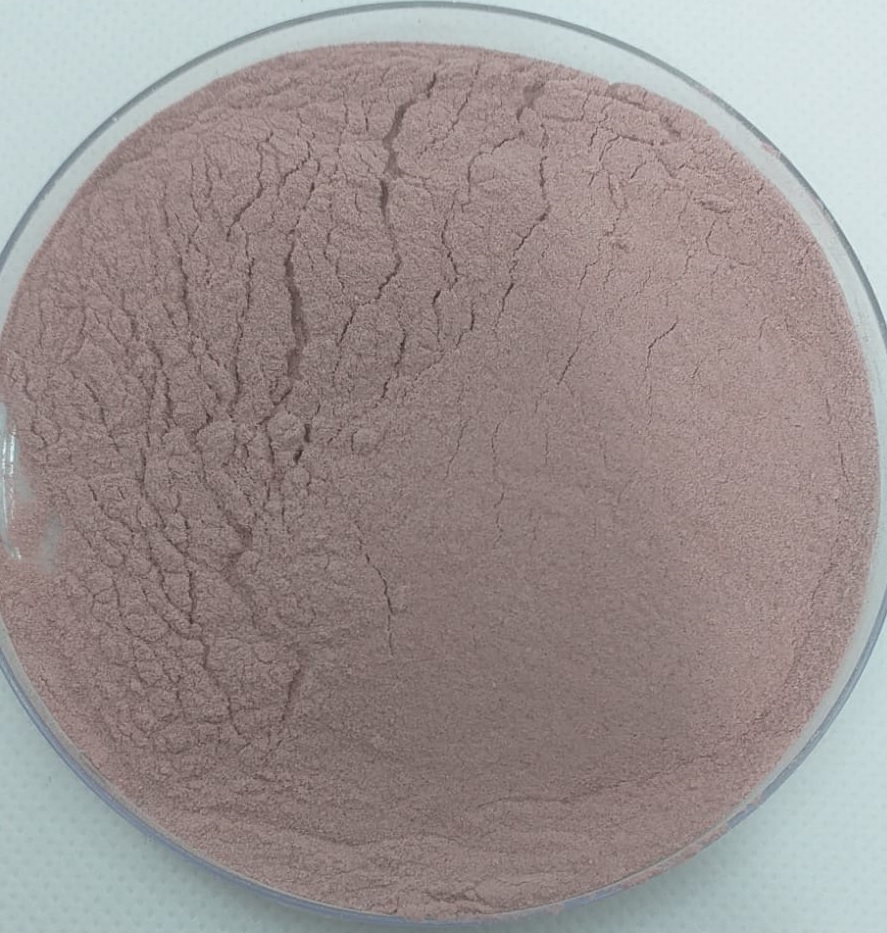
Picture: Jabuticaba Powder 2:1 (spray dried)
Natural Composition and Distinctive Characteristics
Jabuticaba has attracted scientific interest because its peel contains phenolic compounds, particularly anthocyanins associated with its characteristic dark coloration. Studies have identified compounds such as cyanidin-3-O-glucoside and ellagic acid in jabuticaba peel extracts.
Research evaluating jabuticaba peel materials has also reported the presence of fiber and phenolic compounds. Nevertheless, concentrations can vary significantly according to the fruit variety, growing conditions, maturity, fruit fraction and processing technique.
This variability is commercially important. A whole-fruit powder, a pulp powder and a peel-rich powder may present different:
- Colors;
- Flavor intensity;
- Fiber levels;
- Polyphenol profiles;
- Solubility;
- Texture;
- Recommended inclusion rates.
Manufacturers should therefore define the purpose of the ingredient before selecting a specification.
A product intended primarily for flavor may require different characteristics from one developed for color, fiber enrichment, fruit identity or botanical positioning.
Color Profile
The dark peel of jabuticaba is naturally associated with purple and reddish pigments. Depending on the formulation and processing method, Jabuticaba Fruit Powder may contribute purple, burgundy, reddish-brown or dark berry tones.
Color performance should be validated in the final product because anthocyanin-related pigments can respond to factors such as:
- pH;
- Temperature;
- Light exposure;
- Oxygen;
- Processing time;
- Water activity;
- Interaction with other ingredients.
Acidic beverage systems may produce a different visual result from neutral dairy, bakery or protein-based formulations. Pilot testing is therefore essential before establishing color expectations at commercial scale.
Flavor and Aroma
Jabuticaba generally presents a fruity, slightly acidic and sweet-tart sensory profile. The final powder may have subtle or concentrated fruit notes depending on the raw material and drying process.
In product development, the ingredient can be combined with flavors such as:
- Grape;
- Açaí;
- Blueberry;
- Blackberry;
- Raspberry;
- Strawberry;
- Citrus fruits;
- Cocoa;
- Vanilla;
- Tropical fruit blends.
The most suitable combination will depend on the target consumer, product category, sweetness level and desired Brazilian identity.
Main Industrial Applications of Jabuticaba Fruit Powder
One of the primary commercial advantages of Jabuticaba Fruit Powder is its versatility. The ingredient may be evaluated across several food, beverage and nutraceutical platforms.
Before commercial production, manufacturers should perform stability, sensory, microbiological and compatibility tests under the actual conditions of the intended formulation.
Functional Beverages and Powdered Drink Mixes
Jabuticaba Fruit Powder can be considered for powdered beverages, instant drink preparations, fruit blends, smoothie mixes and wellness-oriented beverage concepts.
It may support a distinctive flavor profile and contribute to a visually attractive formulation. Depending on its specification, however, the powder may disperse rather than dissolve completely.
Manufacturers should evaluate:
- Sedimentation;
- Dispersibility;
- Particle suspension;
- Acidity;
- Sweetness balance;
- Color stability;
- Aroma retention;
- Compatibility with minerals, proteins and botanical extracts.
The term “water-soluble” should only be used when supported by the technical characteristics of the specific product.
Nutraceuticals and Dietary Supplements
Jabuticaba ingredients may be incorporated into capsules, sachets, powdered supplements and multi-ingredient superfood formulas.
In this segment, companies can use jabuticaba as part of a broader Brazilian fruit or botanical concept. It may be combined with açaí, acerola, guarana, camu-camu or other ingredients according to formulation goals.
Any nutritional, antioxidant or health-related claim must be supported by testing and comply with the laws of the country where the finished product will be sold.
Smoothies and Superfood Blends
The powder format is well suited to dry superfood blends designed for smoothies, bowls, shakes and convenient daily preparations.
Jabuticaba can add a differentiated Brazilian component to blends that would otherwise rely exclusively on globally familiar berries.
This application can be valuable for brands seeking:
- Premium product positioning;
- Brazilian ingredient collections;
- Exotic berry combinations;
- Natural-origin product narratives;
- Distinctive purple-fruit concepts.
Bakery and Confectionery Products
Jabuticaba Fruit Powder may be evaluated in cakes, cookies, cereal bars, fillings, chocolate products, icings and bakery premixes.
Heat exposure can affect color, flavor and sensitive compounds, so the ingredient should be tested under the complete baking or processing cycle.
In some applications, jabuticaba may function more effectively as a flavor accent, filling ingredient or post-baking component than as the primary source of color.
Dairy and Plant-Based Products
The ingredient may also be evaluated in yogurts, fermented products, ice creams, frozen desserts and plant-based alternatives.
Scientific research has explored the use of jabuticaba-derived color in yogurt formulations, illustrating the fruit’s potential for sensory and technological applications.
In these matrices, developers should examine:
- pH interaction;
- Protein stability;
- Syneresis;
- Color migration;
- Flavor balance;
- Shelf-life behavior.
Gourmet, Culinary and Specialty Products
Jabuticaba Fruit Powder may also be suitable for sauces, dessert preparations, fruit seasonings, culinary blends and premium products inspired by Brazilian cuisine.
This category allows brands to emphasize origin, authenticity and creativity rather than positioning the ingredient only through nutritional language.
Advantages of Using Jabuticaba in Powder Form
Fresh jabuticaba has limited international availability because of its perishability and sensitivity during transportation. Powder processing offers a more practical alternative for companies outside Brazil.
Potential operational advantages include:
- Reduced dependence on frozen storage;
- Easier international transportation;
- Greater formulation convenience;
- More predictable dosing;
- Longer usability than fresh fruit;
- Compatibility with dry manufacturing processes;
- Possibility of bulk commercial supply.
These benefits vary according to the product specification, packaging and storage instructions. Buyers should always review the recommended shelf life and handling requirements provided for the selected batch.
Powder formats can simplify manufacturing, but they do not eliminate the need for technical evaluation. Hygroscopicity, caking, oxidation and pigment degradation can still occur when storage conditions are inadequate.
How to Select a Jabuticaba Fruit Powder Supplier
Selecting an ingredient supplier requires more than comparing prices. International buyers should consider consistency, documentation, traceability, communication and export capability.
A qualified supplier should be able to provide clear information about the ingredient and explain which characteristics may vary between specifications or production batches.
Important evaluation criteria include:
Brazilian Origin and Ingredient Identity
Buyers should confirm the origin of the raw material and the botanical identification used in the documentation.
The names Myrciaria cauliflora, Myrciaria jaboticaba and species classified under the genus Plinia may appear in scientific, commercial or botanical references. The exact botanical name declared for the supplied ingredient should be confirmed in its specification.
Technical Documentation
Depending on the product and destination market, buyers may request documents such as:
- Technical data sheet;
- Certificate of Analysis;
- Safety Data Sheet, when applicable;
- Microbiological parameters;
- Moisture specification;
- Ingredient composition;
- Allergen statement;
- GMO statement;
- Country-of-origin declaration;
- Storage and shelf-life instructions;
- Packaging information.
Additional analyses may be required according to the buyer’s internal quality program or the regulations of the importing country.
Batch Consistency
Natural ingredients can vary because of harvest conditions and raw-material characteristics. A reliable sourcing process should establish acceptable parameters for color, moisture, particle size, microbiology and other critical attributes.
For manufacturers, consistency is essential because variations can affect sensory results, production performance and label declarations.
Export Experience
International ingredient supply involves documentation, customs procedures, transport coordination and communication between multiple parties.
Working with an export-oriented company can reduce operational complexity and help the buyer understand available shipping alternatives, minimum quantities and documentation requirements.
Prover Brasil for Export Ltda. serves the international B2B market with Brazilian superfoods, fruit products, herbs and botanical ingredients. Companies planning new formulations can review the company’s Brazilian fruit powders and botanical ingredient portfolio to identify products compatible with their development strategy.
Key Technical Questions Before Purchasing
Before requesting a commercial quotation, companies should prepare a clear technical brief. This helps the supplier recommend a suitable product and reduces misunderstandings during sample evaluation.
The purchasing or research and development team should clarify:
- Is the product made from pulp, peel or whole fruit?
- Does the formulation contain a carrier agent?
- What is the recommended storage condition?
- What is the expected shelf life?
- Is the powder soluble, partially soluble or dispersible?
- What microbiological limits are specified?
- Which packaging formats are available?
- What is the minimum order quantity?
- Can a representative sample be evaluated?
- Which export documents can be supplied?
- Is the ingredient intended for food, beverage or supplement use?
- Are destination-market tests required?
A lower price does not necessarily represent a lower total cost. An ingredient that produces sedimentation, excessive flavor variation, unstable color or production losses can become more expensive during scale-up.
The commercial decision should consider the complete relationship between quality, performance, documentation, logistics and supply reliability.
Formulation Considerations for Product Developers
Jabuticaba Fruit Powder should be tested within the actual formulation rather than evaluated only as a standalone powder.
Its performance may change when combined with sweeteners, acids, proteins, emulsifiers, minerals, fibers and other botanical ingredients.
Establishing the Inclusion Rate
The appropriate inclusion rate depends on the intended function.
A small amount may be sufficient when the objective is to support a fruit story or complementary flavor. Higher quantities may be necessary when jabuticaba is expected to become the dominant sensory component.
Excessive inclusion can increase acidity, astringency, sedimentation or dark coloration. Product developers should conduct incremental trials and document the results.
Managing Acidity and Sweetness
The natural tartness associated with jabuticaba may work well in beverages, gummies, fruit preparations and berry blends.
However, sweetness should be adjusted carefully. Too much sweetener can hide the fruit’s identity, while insufficient sweetness may result in an overly sharp profile.
The final balance should reflect the target market and product category.
Evaluating Color Stability
Developers should observe the product immediately after production and throughout its intended shelf life.
Tests should reproduce expected commercial conditions, including:
- Ambient or refrigerated storage;
- Exposure to light;
- Changes in packaging headspace;
- Thermal processing;
- Transportation;
- Repeated opening by the consumer.
Color measured only on the production day does not demonstrate long-term stability.
Reviewing Regulatory Requirements
Jabuticaba may be familiar in Brazil but less common in other jurisdictions. Importers should verify whether the ingredient is accepted for the intended food or supplement category in the destination country.
The buyer is responsible for confirming applicable requirements concerning:
- Ingredient authorization;
- Label nomenclature;
- Nutrition declarations;
- Maximum use levels;
- Novel food rules;
- Supplement regulations;
- Claims;
- Import documentation.
Regulatory evaluation should occur before commercial launch, not after the formulation has already been finalized.
Commercial Differentiation Through Brazilian Origin
The commercial potential of Jabuticaba Fruit Powder extends beyond its technical function.
A product containing jabuticaba can communicate a genuine connection to Brazilian biodiversity. This gives marketing teams a platform for educational content, packaging storytelling and product differentiation.
Possible positioning concepts include:
- Brazilian purple-fruit blend;
- Native Brazilian berry formulation;
- Tropical superfruit innovation;
- Brazilian biodiversity collection;
- Premium exotic fruit beverage;
- Specialty ingredient sourced from Brazil.
The most effective communication combines creativity with transparency. Brands should avoid presenting the ingredient as a miracle solution or making claims unsupported by the finished product.
A credible message explains what jabuticaba is, where it comes from, why it was selected and how it contributes to the sensory or formulation experience.
Jabuticaba Fruit Powder Compared with Conventional Berry Powders
Jabuticaba does not need to replace established berries in every application. Its value often lies in differentiation and combination.
Blueberry, raspberry, strawberry and cranberry are already recognized by consumers in many markets. Jabuticaba can complement these fruits while creating a more original formula.
Compared with conventional berry powders, jabuticaba may offer:
- A more distinctive Brazilian origin;
- Lower familiarity and therefore greater novelty;
- A unique sweet-tart sensory identity;
- Strong visual storytelling;
- Compatibility with exotic superfood positioning;
- Opportunities for premium or limited-edition launches.
The ideal choice depends on the commercial goal. Familiar fruits may reduce the need for consumer education, while jabuticaba can make the product more memorable.
Frequently Asked Questions About Jabuticaba Fruit Powder
What is Jabuticaba Fruit Powder used for?
Jabuticaba Fruit Powder may be evaluated for beverages, smoothie blends, supplements, bakery products, confectionery, dairy products, plant-based alternatives and specialty food formulations.
Its suitability depends on the product specification and the technical requirements of the final application.
Is Jabuticaba Fruit Powder the same as jabuticaba peel powder?
Not necessarily.
Jabuticaba Fruit Powder may be produced from pulp, whole fruit or a defined combination of fruit fractions. Jabuticaba peel powder is specifically produced from the fruit’s outer portion.
Because the peel contains much of the fruit’s dark pigmentation, peel-rich ingredients may present a different color, flavor, fiber content and phenolic profile from pulp-based powders.
Is Jabuticaba Fruit Powder water-soluble?
Some powders may disperse effectively in water without dissolving completely. Solubility depends on the raw material, manufacturing process, particle size and use of carrier agents.
Buyers should request the technical specification and perform a beverage test before making a solubility claim.
Does Jabuticaba Fruit Powder contain anthocyanins?
The dark peel of jabuticaba is recognized as a source of anthocyanin pigments. However, the amount present in a commercial powder depends on the fruit fraction and processing method.
Any quantitative declaration should be based on laboratory analysis of the supplied product rather than general information about fresh jabuticaba.
Can it be used as a natural color ingredient?
Jabuticaba powder may contribute purple, burgundy or reddish tones to some formulations. However, its legal classification as a color additive or coloring food depends on the ingredient, its production process and the regulations of the destination country.
Color performance should also be tested under the pH, heat and shelf-life conditions of the final product.
Is Jabuticaba Fruit Powder suitable for supplements?
It may be evaluated for powdered supplements, capsules and multi-ingredient formulations, subject to technical suitability and regulatory acceptance.
The finished-product company must verify permitted uses, labeling rules and claims in the target market.
What documents should an importer request?
Importers commonly request a specification sheet, Certificate of Analysis, microbiological information, ingredient composition, origin declaration, storage instructions, shelf life and packaging details.
Additional documents or tests may be required by the buyer or importing authority.
Can Jabuticaba Fruit Powder be supplied in bulk?
Bulk availability depends on the supplier, production schedule, specification and requested quantity.
B2B buyers should provide information about the intended application, estimated volume, destination country and required documentation when requesting a quotation.
How should the powder be stored?
The ingredient should be stored according to the supplier’s instructions, generally in sealed packaging protected from moisture, heat, light and strong odors.
Incorrect storage may affect color, aroma, flowability and overall stability.
Conclusion
Jabuticaba Fruit Powder represents a valuable opportunity for food, beverage, nutraceutical and specialty product companies seeking an authentic Brazilian ingredient with a distinctive origin and versatile formulation potential.
Its commercial strength comes from the combination of Brazilian biodiversity, dark-fruit identity, product-development flexibility and the possibility of creating formulations that stand apart from conventional berry products.
Successful use, however, requires careful supplier selection, specification review, pilot testing, regulatory verification and realistic communication. Companies should define whether their priority is flavor, color, fruit content, nutritional composition or brand differentiation before selecting the most appropriate product.
With experience in the international wholesale supply of Brazilian superfoods and botanical raw materials, Prover Brasil for Export Ltda. assists importers, manufacturers, distributors and ingredient companies evaluating products for global markets.
Companies interested in specifications, availability, bulk quantities, export documentation or international shipping can request a tailored Jabuticaba Fruit Powder quotation directly from the Prover Brasil export team.
Scientific Research on Jabuticaba Fruit Powder
Jabuticaba Fruit Powder has attracted scientific interest because of its naturally occurring anthocyanins, polyphenols, and other plant compounds.
Scientific studies have investigated the antioxidant characteristics and nutritional composition of Jabuticaba fruit.
For additional information, consult: