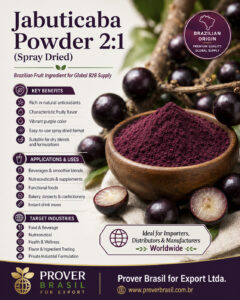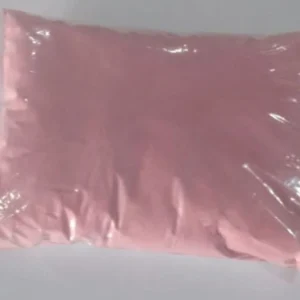

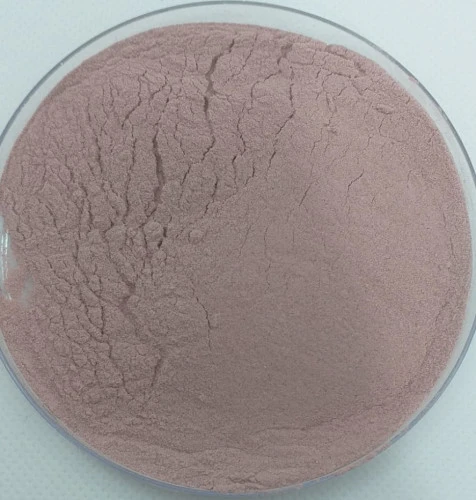
Jabuticaba Powder 2:1 is a Brazilian fruit ingredient developed for food, beverage, nutrition and supplement formulations.
Prover Brasil for Export Ltda. supplies spray-dried Jabuticaba Powder 2:1 for professional B2B customers, including importers, distributors, wholesalers, food manufacturers, beverage companies and product formulators.
Jabuticaba is a distinctive Brazilian fruit known for its dark purple skin and characteristic fruit profile. Scientific research on jabuticaba has attracted increasing interest because different parts of the fruit contain naturally occurring phenolic compounds, including anthocyanins and ellagic-acid-related compounds.
The spray-dried format converts processed fruit material into a practical powdered ingredient suitable for international transportation, storage, blending and industrial formulation.
Botanical nomenclature can be verified through Plants of the World Online – Kew Science.
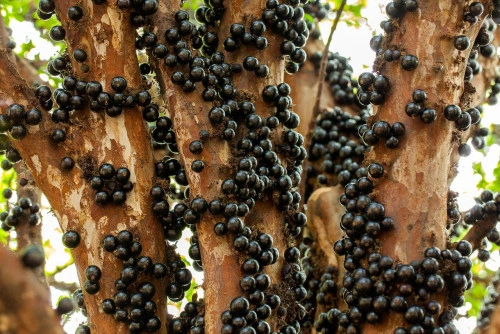
Jabuticaba is a Brazilian fruit traditionally associated with the Myrtaceae family. Unlike most fruits, jabuticaba develops directly on the trunk and larger branches of the tree.
The ripe fruit generally has a dark purple to nearly black external color and a lighter-colored pulp.
Fresh jabuticaba is consumed in Brazil and can also be processed into juices, beverages, jams, desserts and other fruit preparations.
For industrial customers, converting fruit material into powder creates new possibilities for developing products that incorporate a recognizable Brazilian fruit ingredient without handling fresh fruit.
The 2:1 concentration ratio is intended to express the relationship between fruit input and the resulting concentrated ingredient according to the manufacturer’s processing specification.
For industrial purchasing purposes, the ratio should always be evaluated together with the applicable technical documentation.
A 2:1 ratio should not automatically be interpreted as:
Natural fruit composition can vary according to cultivar, growing conditions, maturity, fruit fraction, processing method and storage.
Professional buyers should therefore use the product specification and lot-specific Certificate of Analysis when performing formulation calculations.
Fresh fruit ingredients contain considerable moisture and have limited storage and transportation flexibility.
Spray drying transforms processed fruit material into a powdered form that can be considerably easier to handle in industrial manufacturing.
Jabuticaba Powder 2:1 can provide formulation and logistical advantages such as:
Depending on the production specification, a suitable carrier system may be used during spray drying to support powder formation, handling or stability.
Importers and manufacturers should confirm carrier composition, moisture, microbiological parameters and other technical characteristics in the applicable specification.
Jabuticaba has received scientific attention because the fruit contains several naturally occurring plant compounds.
Anthocyanins are natural pigments associated with red, purple and blue colors in plant materials.
Scientific studies of jabuticaba, particularly its darker fruit fractions, have identified anthocyanins such as cyanidin derivatives.
These compounds are studied for their antioxidant properties in laboratory and food-science research.
However, the presence of anthocyanins in the fruit does not establish a guaranteed anthocyanin concentration in every commercial powder.
When a standardized anthocyanin value is required, buyers should request an appropriate analytical specification.
Research has identified several phenolic compounds in jabuticaba materials.
Published studies have reported compounds including:
Phenolic profiles vary according to the jabuticaba species or variety, fruit fraction and processing method.
The characteristic purple color of jabuticaba is an important element of its identity.
Depending on the formulation and product specification, jabuticaba powder can contribute a naturally fruit-derived visual identity to beverage and food concepts.
Color performance should nevertheless be evaluated in the complete formulation because pH, temperature, oxygen, light, moisture and interactions with other ingredients can influence natural pigments.
For industrial customers, the value of jabuticaba goes beyond individual nutrients.
Its strongest commercial attributes include its Brazilian origin, distinctive fruit identity, natural pigment profile and compatibility with modern food and beverage concepts.
Jabuticaba gives manufacturers an opportunity to develop products associated with Brazilian biodiversity and less-common tropical fruits.
It can help differentiate formulations that would otherwise rely only on widely available international fruit ingredients.
The 2:1 format allows formulators to introduce concentrated jabuticaba fruit material while maintaining flexibility over serving size and formulation space.
Powdered ingredients can be more practical than fresh fruit for:
Jabuticaba Powder 2:1 can be evaluated alone or combined with other Brazilian fruit ingredients to create multi-fruit formulations.
For additional Brazilian fruit ingredients, see:
View Our Complete Product Catalog
Jabuticaba Powder 2:1 is suitable for use in beverage, food, nutrition and supplement formulations developed for international markets.
Jabuticaba Powder 2:1 may be evaluated for use in:
During beverage development, manufacturers should evaluate dispersibility, sedimentation, flavor, acidity, color and stability in the complete system.
Depending on destination-country regulations and the applicable product specification, Jabuticaba Powder 2:1 may be considered for:
Finished-product claims must comply with the regulations of the market where the final product will be sold.
Potential food applications include:
The ingredient should be application-tested because flavor and color can vary according to dosage and the other components in the formula.
Jabuticaba Powder may also be considered as a fruit component in:
Jabuticaba should not be presented as treating injuries, diseases or medical conditions unless a specific claim is independently supported and legally authorized.
The Brazilian origin and naturally occurring plant compounds of jabuticaba can also support product concepts aimed at the beauty-from-within and general wellness markets.
Any nutritional or functional claim should be based on the composition of the finished product, not simply on research performed with fresh fruit, peel extracts or experimental materials.
Jabuticaba can complement other fruit and botanical powders in multi-ingredient formulations.
This combination can support dark-purple Brazilian fruit concepts for:
Explore our Brazilian Acai Powder.
Acerola can complement jabuticaba in fruit formulations where manufacturers want to explore Brazilian fruit identity together with naturally occurring vitamin C potential.
Explore our Acerola Berry Products.
Jabuticaba and camu camu can be combined in formulations positioned around distinctive Brazilian and Amazonian fruit ingredients.
Explore our Camu Camu Fruit Powder.
For beverage and nutrition concepts where caffeine-containing botanical ingredients are appropriate, jabuticaba may be combined with Brazilian guarana.
Explore our Guarana Products.
Industrial buyers should evaluate more than the product name or concentration ratio.
Depending on the agreed specification, relevant purchasing parameters may include:
Specifications should be agreed before incorporation into a commercial finished product.
Jabuticaba Powder should be stored according to the conditions established in the applicable product specification.
As a general principle, fruit powders should be protected from:
Packaging should remain properly closed when the ingredient is not being used.
For exact shelf life and storage requirements, refer to the specification supplied for the purchased product.
International importers may request technical information relevant to their application and destination market.
Available documentation should be confirmed with Prover Brasil for Export Ltda. according to the specific product and shipment.
The Certificate of Analysis (COA) for the applicable production lot is especially important because it provides analytical information corresponding to the supplied batch.
Buyers requiring particular chemical, microbiological, contaminant or regulatory parameters should communicate those requirements before ordering.
Prover Brasil for Export Ltda. supplies Brazilian fruit powders, botanical ingredients and herbal raw materials to professional buyers in international markets.
Jabuticaba Powder 2:1 can be evaluated by:
For B2B buyers, Jabuticaba Powder 2:1 provides a practical spray-dried Brazilian fruit ingredient for industrial formulation and product development.
Buyers can also explore the complete Brazilian ingredient catalog.
Yes. This product is supplied as Jabuticaba Powder 2:1 (spray dried) according to the applicable commercial specification.
The accepted botanical name listed by Kew Science is Plinia cauliflora (Mart.) Kausel.
Myrciaria cauliflora (Mart.) O.Berg is a botanical synonym that is still commonly recognized in literature and commercial contexts.
The 2:1 ratio describes the relationship between starting fruit material and resulting concentrated ingredient according to the applicable processing specification.
It should not be interpreted as a guarantee that every nutrient or phytochemical is present at exactly twice the concentration found in fresh fruit.
Scientific literature has identified anthocyanins in jabuticaba fruit materials.
The actual amount present in a commercial powder depends on the raw material, fruit fractions, processing and product specification.
If a specific anthocyanin concentration is required, request appropriate analytical confirmation.
Complete solubility should not be assumed for a fruit powder.
Formulation behavior can depend on particle size, fruit solids, carrier composition and other technical characteristics.
Manufacturers should test dispersibility and sedimentation in the intended finished beverage.
It may be evaluated for powdered beverages, smoothies, fruit drink premixes, nutrition drinks and related applications.
The final formulation should be tested for flavor, appearance, dispersibility and stability.
It may be evaluated for supplement applications subject to the product specification and the regulations of the country where the finished product will be marketed.
Jabuticaba Powder should not be marketed as a treatment, cure or prevention for disease unless such a claim is specifically authorized by the applicable regulatory authority and supported by appropriate evidence.
Scientific research on jabuticaba does not mean that every commercial jabuticaba ingredient provides the same biological effects.
Professional buyers should contact Prover Brasil for Export Ltda. to discuss the available specification, Certificate of Analysis and documentation applicable to the required product and shipment.
Scientific literature should be used to understand the composition and research context of jabuticaba. Results obtained with fresh fruit, peel flour, extracts or laboratory materials should not automatically be attributed to a commercial spray-dried powder.
Royal Botanic Gardens, Kew – Plants of the World Online.
Plinia cauliflora (Mart.) Kausel. Accepted botanical name and taxonomic information.
View the botanical record at Kew Science
Nascimento, R. P. et al. – Myrciaria jaboticaba Fruit Peel: Bioactive Composition and Biological Potential.
Research discussing phenolic compounds, anthocyanins, phenolic acids and other components reported in jaboticaba fruit materials.
Read the article through PubMed Central
Resende, L. M. et al. – Polyphenols in Jabuticaba (Plinia spp.) Peel Flours.
Study evaluating the phenolic profile of jabuticaba materials, including cyanidin-3-O-glucoside and ellagic acid.
Read the article through PubMed Central
Ávila, L. B. et al. – Recovery of Bioactive Compounds from Jaboticaba Peels.
Research examining phenolic compounds, anthocyanins and antioxidant activity in experimentally processed jabuticaba materials.
Read the article through PubMed Central
Mattos, G. N. et al. – Anthocyanin Extraction from Jaboticaba Skin.
Research focused on anthocyanin extraction and the characteristics of jabuticaba skin as a source of natural pigments.
Read the article through PubMed Central
Quatrin, A. et al. – Characterization and Quantification of Tannins, Flavonols, Anthocyanins and Phenolic Acids in Jaboticaba Peel Powder.
Research characterizing free and matrix-bound phenolic compounds in jaboticaba peel powder.
View the scientific record
Published scientific studies describe specific jabuticaba fruits, fruit fractions, extracts, peel powders or experimental preparations.
These studies do not establish that every commercial Jabuticaba Powder 2:1 has identical phytochemical concentrations or produces the same experimental results.
Product composition should be verified through the applicable specification and Certificate of Analysis.
Health, nutritional and functional claims for a finished product must comply with the laws and regulations of the country in which that product will be marketed.
Looking for a Brazilian Jabuticaba Powder supplier for bulk B2B purchasing?
Prover Brasil for Export Ltda. supplies Jabuticaba Powder 2:1 and other Brazilian fruit and botanical ingredients for professional buyers worldwide.
Whether you are developing beverages, food products, supplements or multi-fruit formulations, contact our team to discuss specifications, quantities and international shipping requirements.
Contact Prover Brasil for Export Ltda.