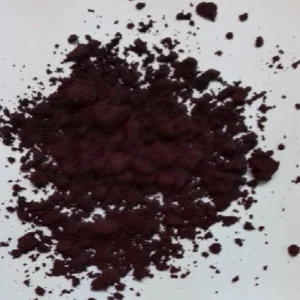

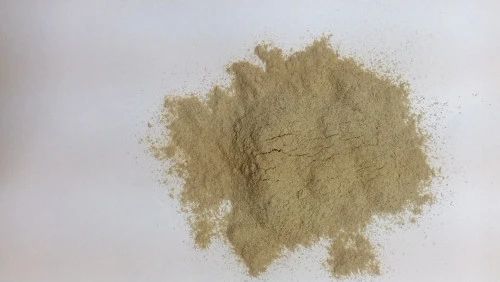
Brazilian botanical bark powder for importers, distributors, wholesalers and professional herbal ingredient buyers worldwide
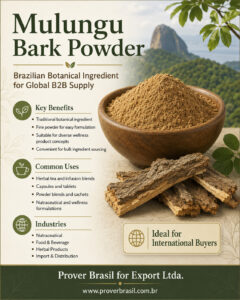
Prover Brasil for Export Ltda. supplies Mulungu Bark Powder from Brazil for international companies searching for distinctive Brazilian botanical raw materials.
Mulungu has a long history within Brazilian herbal traditions and remains an interesting botanical for companies developing traditional herbal, botanical wellness and specialty ingredient formulations.
Our Mulungu product offered on this page is Mulungu Bark Powder.
It is important to distinguish bark powder from concentrated botanical extracts. Mulungu Bark Powder is a milled botanical raw material produced from the bark and should not be confused with a dry extract or standardized extract.
Professional buyers can contact Prover Brasil for Export Ltda. for current availability, commercial quantities, product information and export quotations.
View our complete Brazilian botanical products catalog.
Product: Mulungu Bark Powder
Botanical name:
Family: Fabaceae
Plant part: Bark
Form: Powder
Origin: Brazil
Commercial format: Botanical raw material
Market: B2B / wholesale / international sourcing
The accepted botanical species Erythrina mulungu belongs to the Fabaceae family. Botanical databases recognize the species as native to parts of South America, including Brazil.
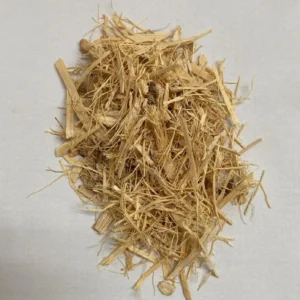
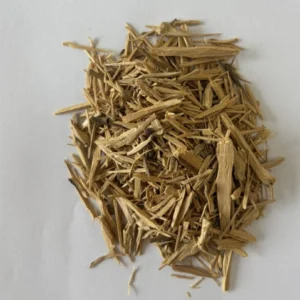
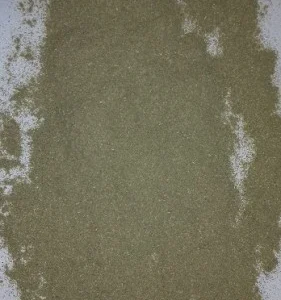
Mulungu Bark Powder is produced from the bark of the Mulungu tree and processed into a powdered botanical material.
Rather than concentrating selected constituents through extraction, a bark powder maintains the character of the milled botanical material.
This distinction matters to professional buyers.
When evaluating Brazilian botanical ingredients, purchasing teams should verify:
These details help importers determine whether the ingredient is suitable for their intended formulation and regulatory market.
Brazil is internationally known for tropical fruits, seeds, roots, leaves and barks.
Mulungu occupies a particularly distinctive position within this botanical diversity because it is traditionally associated with calming and relaxation-oriented herbal preparations rather than energy or stimulant concepts.
This makes Mulungu an interesting contrast to better-known Brazilian ingredients such as Guarana and other botanicals positioned for active-lifestyle formulations.
Traditional use, however, should not be confused with an approved medical indication.
Scientific research has investigated constituents of Erythrina mulungu, including erythrinian alkaloids, and their biological activity. Much of the research remains experimental or limited, so therapeutic effectiveness should not be assumed from traditional use or preliminary studies.
Mulungu has traditionally been used in Brazil in herbal preparations associated with periods of rest, relaxation and nighttime routines.
For international product developers, this traditional positioning may make Mulungu relevant to concepts built around:
Product claims must always comply with the laws and regulations of the country where the finished product will be sold.
Mulungu offers manufacturers and distributors an ingredient with a strong connection to Brazilian botanical heritage.
That origin can create meaningful differentiation for companies developing botanical portfolios built around South American ingredients.
While many Brazilian ingredients are marketed around vitality or energy, Mulungu has traditionally been associated with relaxation-oriented herbal preparations.
This gives formulators another direction for building diversified botanical product ranges.
Mulungu Bark Powder provides a different formulation option from botanical extracts.
Companies specifically searching for milled botanical material can evaluate the powder without positioning it as a concentrated extract.
Professional formulators may evaluate Mulungu alongside complementary botanicals when developing traditional herbal and wellness formulations.
The formulation, dosage, safety assessment and regulatory classification of the finished product should be established by qualified professionals.
Origin, botanical identity, plant part and traditional use can provide useful educational material for brands seeking to explain the botanical heritage behind their formulations.
Mulungu Bark Powder may be relevant to professional buyers operating in areas such as:
Suitability depends on the intended application and regulations in the destination market.
The powder format provides product developers with several possible directions.
It may be evaluated as a standalone botanical ingredient or incorporated into carefully designed multi-ingredient concepts.
Because Mulungu is a botanically active material, formulation should not be based solely on traditional recipes found online.
Professional product development should consider ingredient identity, intended serving format, regulatory status, interactions with other ingredients and applicable consumer warnings.
A botanical concept can combine Mulungu Bark Powder with ingredients traditionally associated with evening herbal preparations, such as:
This concept could be developed for botanical powder blends, capsules or other permitted formats.
The appropriate proportions should be established by a qualified formulator according to the intended market.
Mulungu can also become the central ingredient in a formulation designed around Brazilian botanical heritage.
A product developer might combine:
The resulting formulation can emphasize botanical origin and ingredient diversity rather than therapeutic claims.
Explore additional ingredients in our Brazilian Herbs Raw Material collection.
Because Mulungu is available as a powder, supplement formulators may evaluate it for encapsulated botanical concepts where the ingredient is permitted by local regulations.
A professional formulation may combine Mulungu with compatible non-stimulant botanicals selected according to the intended product positioning.
Final dosage, serving instructions and warnings should be determined through appropriate professional and regulatory review.
Companies specializing in traditional herbs may use Mulungu as part of a broader South American botanical collection.
This concept can emphasize:
This type of positioning can be particularly relevant to botanical distributors seeking ingredients that differ from globally commoditized herbs.
These two ingredient formats should not be treated as interchangeable.
Mulungu Bark Powder is a milled botanical material produced from the bark.
A Mulungu extract, by contrast, would undergo an extraction process designed to transfer selected soluble components from the botanical material into an extract.
The product described and offered on this page is:
Mulungu Bark Powder
Buyers specifically requiring an extract should not assume that the powder has an extraction ratio or standardized concentration.
Professional buyers sourcing Mulungu may also be interested in other Brazilian bark ingredients supplied by Prover Brasil for Export Ltda.
Catuaba is another well-known Brazilian bark ingredient with a very different traditional market positioning.
Explore Catuaba Bark Products.
Pau D’Arco, also known internationally as Taheebo or Lapacho, is another South American botanical available in different bark formats.
Explore Pau D’Arco Bark Products.
Jatoba offers importers another distinctive bark-derived Brazilian botanical raw material.
Companies expanding their Brazilian botanical portfolio may also evaluate Muira Puama products.
Professional botanical sourcing should begin with clear identification of the raw material.
The scientific name helps differentiate a botanical from other plants that may share similar regional or common names.
For Mulungu, the botanical identification used on this page is:
Erythrina mulungu
The genus and species should be written in italics.
Reliable botanical identification is especially important for importers, ingredient distributors and companies responsible for finished-product documentation.
Mulungu has attracted scientific attention because species in the genus Erythrina contain characteristic alkaloids.
Research has investigated erythrinian alkaloids isolated from Erythrina mulungu and their activity in experimental models. These studies provide useful research context, but they should not be interpreted as confirmation that commercial Mulungu Bark Powder prevents, treats or cures disease.
Scientific evidence should therefore be communicated separately from traditional use.
Royal Botanic Gardens, Kew – Plants of the World Online
Botanical information and taxonomic reference for Erythrina mulungu.
View Erythrina mulungu at Kew Science
Flausino O. Jr. et al. – Journal of Natural Products, 2007
Research concerning erythrinian alkaloids isolated from Erythrina mulungu.
View the research on PubMed
Setti-Perdigão P. et al. – PLOS ONE, 2013
Experimental research concerning Erythrina mulungu alkaloids and neuronal nicotinic receptor activity.
View the full study
These references are supplied for botanical and scientific background and do not constitute medical claims for the commercial ingredient.
Botanical regulations vary significantly between countries.
The legal status of Mulungu for supplements, herbal products, foods or other applications should therefore be verified by the importer before commercialization.
Professional buyers should evaluate:
Prover Brasil for Export Ltda. supplies the botanical raw material. Responsibility for evaluating its suitability in the destination market remains with the importer and finished-product company.
The product described on this page is Mulungu Bark Powder.
The botanical name used for this product is Erythrina mulungu.
The product is produced from the bark.
No.
Mulungu Bark Powder is a powdered botanical material and should not be represented as a concentrated dry extract.
Not to the Mulungu Bark Powder described on this page.
Extraction ratios are normally associated with extracts rather than ordinary milled botanical powder.
The product offered by Prover Brasil for Export Ltda. originates from Brazil.
The product is intended primarily for professional B2B buyers such as importers, distributors, wholesalers, botanical companies and qualified product developers.
Its suitability depends on the laws and regulations of the destination country and the intended finished-product category.
Importers should complete their regulatory review before commercialization.
Commercial ingredient sourcing information should not replace professional formulation or medical guidance.
Serving levels and finished-product directions should be determined by qualified professionals according to the formulation and destination-country regulations.
Prover Brasil for Export Ltda. works with international B2B buyers.
Shipment options depend on quantity, destination, import requirements and commercial conditions.
For a more useful quotation, please inform:
Companies searching for a Mulungu Bark Powder supplier in Brazil can contact Prover Brasil for Export Ltda. to discuss commercial requirements.
Our export team works with international buyers sourcing Brazilian botanicals, herbs, fruit ingredients and specialty plant materials.
Whether you are an importer expanding a botanical portfolio, a distributor searching for Brazilian raw materials or a product developer researching new ingredients, we welcome B2B inquiries.
Explore our complete product catalog.
View Brazilian Herbs Raw Material.
Looking for Mulungu Bark Powder wholesale from Brazil?
Contact Prover Brasil for Export Ltda. with your quantity, destination country and intended commercial application.
Our team can provide current commercial information according to your individual inquiry.
Prover Brasil for Export Ltda.
Brazilian Botanical Ingredients for International B2B Buyers
Website: www.proverbrasil.com.br
Mulungu Bark Powder from Brazil — botanical sourcing for professional buyers worldwide.