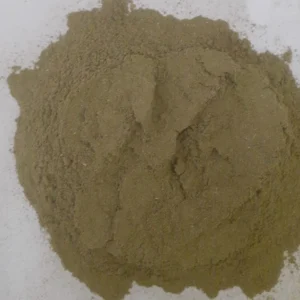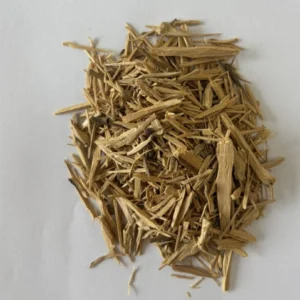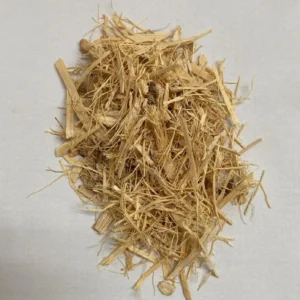

Uncaria tomentosa (Willd. ex Schult.) DC.
Cat’s Claw Powder from Brazil for international B2B buyers. Uncaria tomentosa botanical powder for supplements, herbal blends, powdered formulations and R&D applications.
Select the desired Product above in CHOOSE OPTIONS, enter the quantity in KG (delete the nº1) and ADD TO CART to get the free quote.
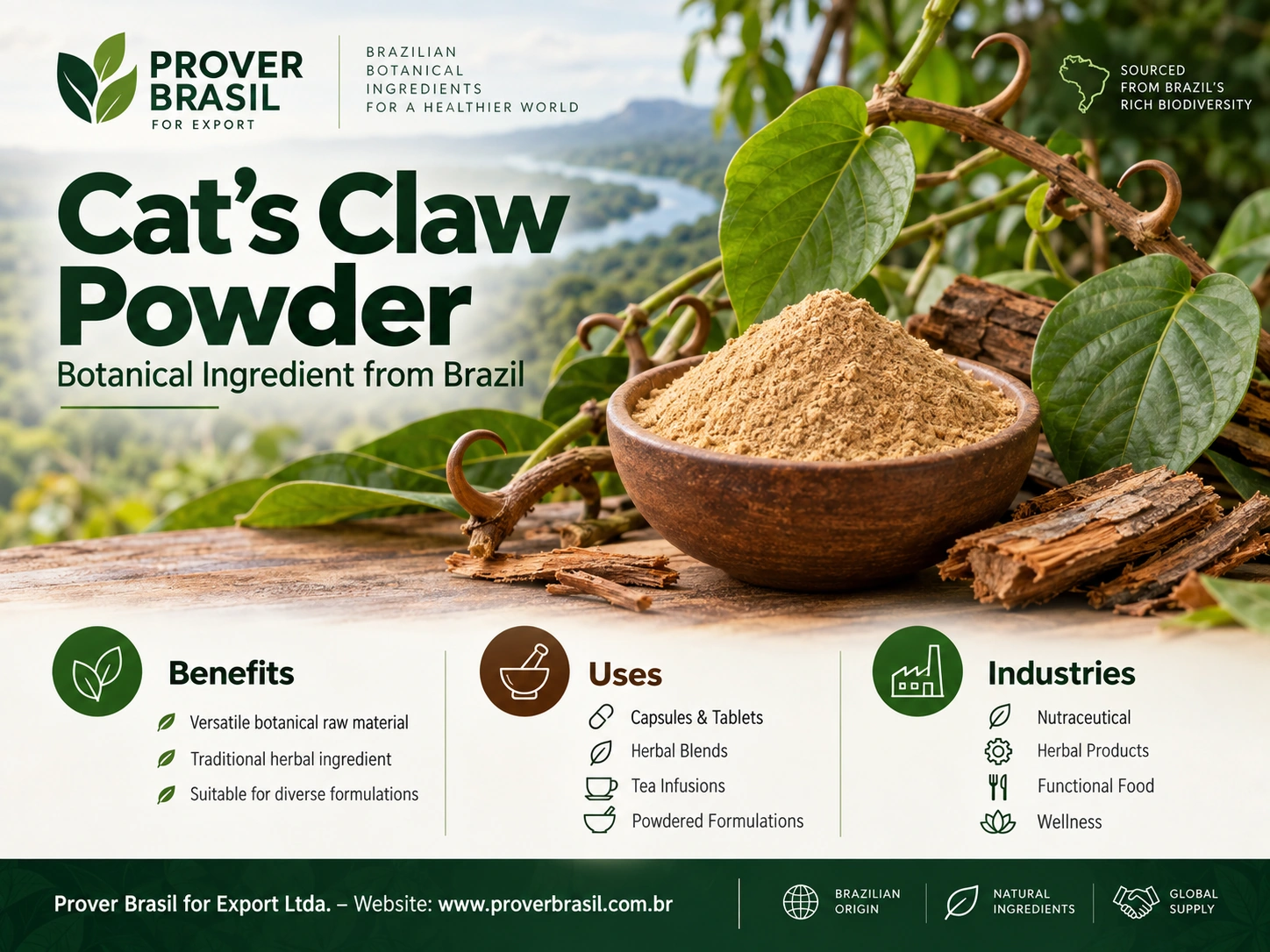
Uncaria tomentosa (Willd. ex Schult.) DC.
Cat’s Claw Powder is a botanical ingredient obtained from Uncaria tomentosa, a climbing plant native to tropical regions of Central and South America, including Brazil.
Also known internationally as Cat’s Claw and Uña de Gato, this botanical has a long history of traditional use and continues to attract interest from researchers, botanical ingredient companies and product developers worldwide.
Prover Brasil for Export Ltda. supplies Cat’s Claw Powder from Brazil for international B2B buyers seeking botanical ingredients for supplements, herbal blends, powdered formulations, infusions and other permitted applications.
Professional buyers can also explore our complete range of Brazilian botanical ingredients.
Companies can request product specifications, available packaging, analytical documentation and international shipping information according to their purchasing requirements.
Product: Cat’s Claw Powder
Botanical name: Uncaria tomentosa (Willd. ex Schult.) DC.
Family: Rubiaceae
Common names: Cat’s Claw, Cats Claw, Uña de Gato
Ingredient format: Powder
Origin: Brazil
Market: B2B / Bulk / Wholesale
Applications: Botanical formulations, supplements, herbal blends, teas, powdered beverages and R&D projects
Correct botanical identification is particularly important when sourcing botanical raw materials because common names may occasionally be associated with different plant species.
According to Royal Botanic Gardens, Kew – Plants of the World Online, Uncaria tomentosa is an accepted species of the Rubiaceae family. Kew also lists its native range across tropical Central and South America, including northern Brazil.
Cat’s Claw Powder is produced from processed plant material of Uncaria tomentosa. The plant is a woody tropical vine whose characteristic curved thorns resemble a cat’s claw, which explains its widely recognized English common name.
Its botanical profile has generated scientific interest because Uncaria tomentosa contains several groups of naturally occurring phytochemicals.
Research on Cat’s Claw has investigated compounds including:
The composition of a botanical ingredient can vary according to plant material, geographical origin, harvesting conditions and processing.
For this reason, professional buyers should evaluate specifications and analytical documentation associated with each lot.
For commercial buyers, the principal advantages of Cat’s Claw Powder relate to its botanical identity, traditional recognition, phytochemical profile and versatility in botanical product development.
Cat’s Claw has a long history of traditional use in South America.
Its internationally recognized common name can make it an interesting ingredient for companies developing botanical products inspired by Amazonian and South American plant resources.
Scientific investigations of Uncaria tomentosa have identified several botanical compounds, including oxindole alkaloids and polyphenolic substances.
Research published in Phytochemistry investigated the antioxidant properties of proanthocyanidins in Uncaria tomentosa bark.
These studies provide useful scientific background for companies and R&D departments evaluating Cat’s Claw as a botanical ingredient.
Scientific research should not be interpreted as proof that a finished product prevents, treats or cures disease.
Cat’s Claw Powder may also be evaluated alongside other Brazilian and South American ingredients when developing botanical blends.
For example, product developers can combine or compare Cat’s Claw with:
Pau D’Arco Bark Products, another recognized South American botanical supplied in different ingredient formats.
Pfaffia Paniculata Suma Root Products, available for companies developing Brazilian botanical formulations.
Muira Puama Products, another Brazilian botanical ingredient used in international herbal product portfolios.
Companies interested in additional options can browse the complete Prover Brasil product portfolio.
Combining botanical ingredients requires consideration of sensory characteristics, compatibility, serving levels and regulations in the destination market.
Supplement companies may evaluate Cat’s Claw Powder for capsules, tablets, powdered botanical blends and other formats where its use is permitted.
During formulation, technical teams should consider:
Regulatory requirements for botanical ingredients vary between countries.
Therefore, importers, distributors and formulators should confirm permitted uses, labeling requirements and product claims in each destination market.
Botanical ingredient companies can incorporate Cat’s Claw Powder into multi-ingredient concepts developed around South American plants.
It may be considered for formulations combining botanical powders traditionally associated with Amazonian or tropical South American ingredient portfolios.
Possible applications include:
Product developers should conduct stability, flavor and compatibility evaluations before defining the final commercial formula.
Cat’s Claw has traditionally been prepared as a botanical decoction or infusion.
For commercial tea and herbal infusion applications, companies should evaluate whether powdered material or another particle format is more appropriate for their intended product.
Important formulation characteristics include:
Cat’s Claw has an earthy and characteristic botanical flavor profile.
For this reason, complementary fruit or botanical ingredients can be evaluated to create more balanced formulations.
Cat’s Claw Powder can also be investigated by R&D departments working with powdered botanical beverages and premixes.
Because botanical powders do not necessarily dissolve completely in water, developers should evaluate:
Pilot-scale trials are recommended before commercial production.
Scientific research has investigated several characteristics of Uncaria tomentosa.
A 2024 systematic review and meta-analysis entitled Anti-inflammatory and/or immunomodulatory activities of Uncaria tomentosa extracts evaluated 24 preclinical studies.
The researchers examined several inflammatory mediators and reported changes involving selected markers including NF-κB and IL-6, while other measured markers did not show statistically significant changes.
This research is useful scientific background for understanding Uncaria tomentosa, but it primarily concerns preclinical evidence and should not be interpreted as proof of clinical effects in consumers.
Another scientific publication investigated the antioxidant properties of proanthocyanidins from Uncaria tomentosa bark.
Research of this type can help ingredient companies understand the phytochemical characteristics of Cat’s Claw and provide background information for product development.
For botanical identification and geographical distribution, professional buyers can also consult the Uncaria tomentosa botanical record at Kew Science.
Cat’s Claw Powder can be evaluated as a botanical ingredient for capsule, tablet and powdered supplement concepts where permitted by local regulations.
R&D departments may investigate Uncaria tomentosa as part of broader botanical ingredient portfolios and multi-component formulations.
Cat’s Claw can be incorporated into selected herbal infusion concepts, subject to formulation requirements and applicable regulations.
Ingredient distributors can add Cat’s Claw Powder to portfolios aimed at companies purchasing Brazilian and South American botanical materials.
Cat’s Claw may be combined with selected botanical and fruit ingredients to create differentiated powdered formulations.
Companies looking for complementary ingredients can review the Brazilian herbs and botanical products available from Prover Brasil.
Universities, laboratories and commercial R&D departments may evaluate Cat’s Claw Powder for botanical characterization, formulation testing and other research projects.
The following formulation concepts are provided for product-development inspiration.
Ingredient proportions should be adjusted according to technical evaluation, local regulations and the intended finished product.
Concept formula:
Cat’s Claw Powder – 5%
Unsweetened cocoa powder – 35%
Carob powder – 25%
Cinnamon powder – 10%
Coconut milk powder – 25%
This formulation combines the characteristic botanical notes of Cat’s Claw with cocoa, carob and cinnamon.
It may be evaluated as a starting point for powdered beverage development.
Concept formula:
Cat’s Claw Powder – 5%
Açaí Powder – 30%
Acerola Powder – 20%
Strawberry Powder – 20%
Camu Camu Powder – 10%
Neutral formulation ingredient – 15%
This concept combines Cat’s Claw with tropical and berry ingredients to create a distinctive South American botanical profile.
Product developers should evaluate acidity, flavor balance, dispersion and stability before defining a commercial formulation.
Concept formula:
Cat’s Claw Powder – 15%
Cinnamon Powder – 15%
Ginger Powder – 10%
Apple Powder – 35%
Passion Fruit Powder – 25%
The fruit components provide additional flavor complexity and may help balance the characteristic herbal profile of Cat’s Claw.
Concept formula:
Cat’s Claw Powder – 10%
Suma Root Powder – 20%
Açaí Powder – 30%
Camu Camu Powder – 20%
Guarana Powder – 5%
Passion Fruit Powder – 15%
This concept combines several recognizable Brazilian and South American ingredients for companies researching differentiated botanical formulations.
More information about Suma is available on our Pfaffia Paniculata Suma Root Products page.
Because Guarana naturally contains caffeine, its inclusion and quantity should be evaluated according to the intended market and applicable regulations.
Brazil offers access to extensive botanical biodiversity and has an established international market for South American botanical ingredients.
Professional international buyers generally evaluate factors beyond price when sourcing botanical raw materials.
Important purchasing criteria can include:
Prover Brasil for Export Ltda. works with international buyers seeking Brazilian herbs, botanical powders, extracts, fruit powders and related ingredients.
Buyers can explore our complete range of Brazilian ingredients before requesting a quotation.
Companies purchasing Cat’s Claw Powder may also be interested in other ingredients supplied by Prover Brasil.
Pau D’Arco Bark Products provide another traditional South American botanical option.
Available formats can support different herbal, botanical and formulation applications.
Pfaffia Paniculata Suma Root Products provide another distinctive Brazilian botanical option for international ingredient buyers.
Companies building broader Brazilian botanical portfolios may also evaluate Muira Puama Products.
Visit our Brazilian Herbs and Botanical Ingredients portfolio to explore additional products available for international B2B inquiries.
Prover Brasil for Export Ltda. supplies botanical ingredients to professional buyers in international markets.
When requesting information about Cat’s Claw Powder, please provide:
Providing this information helps our export team evaluate the appropriate commercial and logistical options for your inquiry.
Cat’s Claw Powder is a botanical powder obtained from Uncaria tomentosa, a tropical climbing plant native to areas of Central and South America.
The species belongs to the Rubiaceae family.
The accepted scientific name is Uncaria tomentosa (Willd. ex Schult.) DC.
Its accepted botanical status can be verified through Royal Botanic Gardens, Kew – Plants of the World Online.
Uña de Gato is the Spanish common name frequently used for Cat’s Claw.
Professional buyers should nevertheless confirm the botanical name because common names alone are not sufficient for precise botanical identification.
Potential applications include dietary supplements, nutraceutical formulations, botanical blends, herbal infusion products, powdered formulations and research projects, subject to applicable regulations.
Scientific literature has investigated oxindole alkaloids, proanthocyanidins, polyphenols and other naturally occurring compounds found in Uncaria tomentosa.
Research into proanthocyanidins and antioxidant properties of Cat’s Claw provides additional scientific information about its phytochemical characteristics.
Yes.
A 2024 systematic review and meta-analysis available through PubMed evaluated preclinical studies involving Uncaria tomentosa extracts and inflammatory mediators.
These results should be interpreted within the limitations of preclinical research and should not be converted into unsupported medical claims for finished products.
Yes. Formulators can evaluate Cat’s Claw Powder alongside other botanical and fruit ingredients when permitted by applicable regulations.
For example, companies can evaluate it together with Suma Root Products or Pau D’Arco Bark Products.
Professional international buyers can contact Prover Brasil for information about bulk quantities, specifications, documentation, packaging and international shipping options.
Uncaria tomentosa (Willd. ex Schult.) DC. – Kew Science
Botanical reference for accepted scientific name, plant family and geographical distribution.
Scientific systematic review and meta-analysis examining preclinical research involving Uncaria tomentosa extracts.
Antioxidant properties of proanthocyanidins of Uncaria tomentosa bark decoction
Research investigating antioxidant properties and the phenolic composition of Uncaria tomentosa bark preparations.
Are you looking for Cat’s Claw Powder from Brazil for your botanical ingredient portfolio, distribution business or product-development project?
Contact Prover Brasil for Export Ltda. with:
Prover Brasil for Export Ltda.
Brazilian botanical ingredients for international B2B markets
www.proverbrasil.com.br